Rechercher dans ce blog

Wednesday, September 29, 2021

Can I Eat Salmon Everyday? Limits, Benefits, Considerations - Greatist

Eating oily fish provides a host of health wins. But is it a good idea to eat salmon every day?

After all, salmon is an awesome source of omega-3 fatty acids. But how much is too much? Is a salmon-heavy diet helpful for weight loss? Does it provide protein? All the questions.

Well, don’t despair. We’ll dish the deets on our fishy friend.

OK, so you’ve been eating salmon every day and now you’re wondering if you’re overdoing it. What’s going to happen if you get too much of this good thing?

Take a deep breath and relax. Even though you don’t need to eat salmon *every* day, making it a regular feature in meals won’t hurt you. In fact, salmon is an excellent source of many nutrients, including:

And it *can* provide a bunch of vitamin D, but this varies depending on whether the salmon is wild or farmed — according to the limited research, wild salmon has the edge on vitamin D content.

There’s more stuff in salmon that helps you than harms you.

Let’s take a look at how much salmon you can nosh on!

How much should you eat every day?

There’s no official recommendation on how much salmon you should eat per day, so you’ll have to go with your soon-to-be-fish-filled gut. If you want to eat it every day, take a look at the weekly recommendation and think about how you could spread it out.

Do you want to go with bigger amounts but eat less frequent servings? Or eat a smattering of salmon every day?

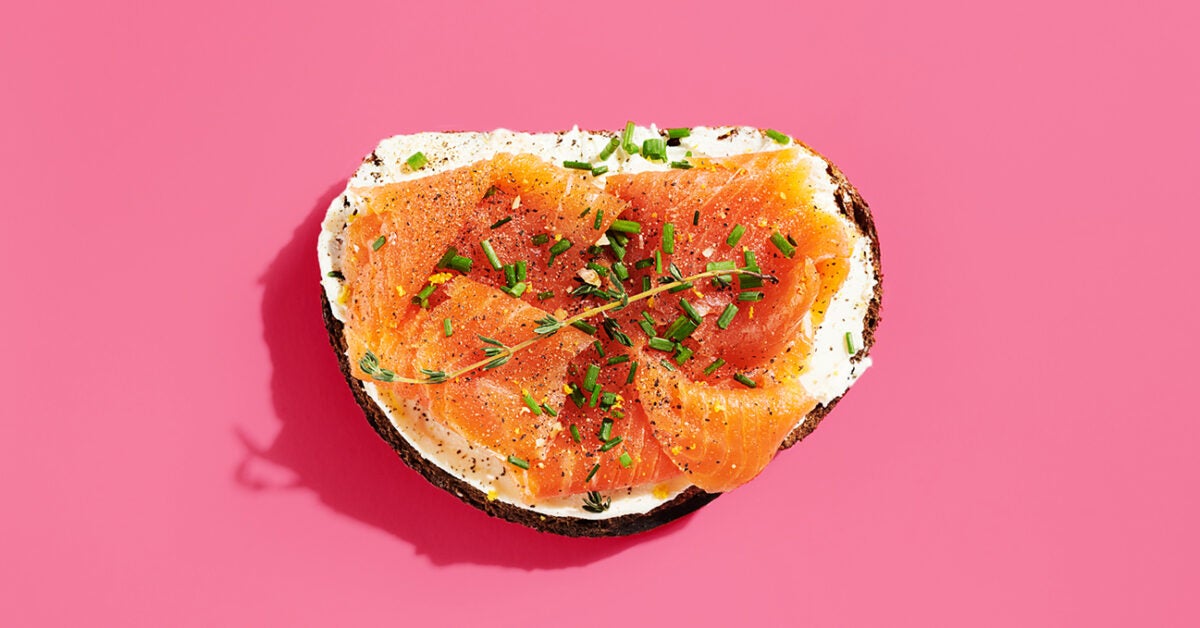
If you’re determined to go with daily salmon consumption, think about it. Small slices of salmon on toast? Sushi? Sashimi? There’s more than one way to get salmon into your diet on a daily basis. Get creative with it.

How much should you eat every week?

The FDA recommends that you eat at least 8 ounces of seafood per week. And again, why not get inventive with it?

After all, you can either divide that up into daily portions or treat yourself to a grilled salmon steak or hearty chunks in a salad. You can make up your own rules!

What are you putting into your body when you chow down on salmon?

It depends on what type of salmon you’re eating. Different types of salmon have different nutritional values. We used the most common type of salmon to appear on U.S. plates (farmed Atlantic salmon) for reference. You can expect to get the nutrients below from 3 ounces of salmon.

For the percentage of your Daily Value (DV), we’ve given the figures for males and females aged 19 to 30 years, but your intake requirement for some nutrients varies depending on your age, pregnancy status, and health needs.

The Dietary Guidelines for Americans are our basis for these values, so feel free to check out the guidelines for your own nutritional situation.

That’s some pretty useful stuff, right?

Different types of salmon: Farmed vs. wild-caught

You’ll generally see two types of salmon in your local supermarket: wild-caught and farmed.

You might notice that farmed salmon is usually a bit bigger and plumper-looking, while wild salmon tends to be smaller and more expensive. So the farmed salmon has to be the better choice, right? Plus, it’s been bred in captivity, so *surely* that’s a more ethical choice than plucking a wild fish from its natural life?

But wait — something seems a little fishy here.

Fish farmers keep salmon in little cages in the sea, and the fish eat an artificial diet that makes them bigger. This means that once they reach your plate, they’re higher in omega-6 fatty acids and lower in omega-3s than wild salmon, although either type of salmon is a nutritious choice.

Wild-caught salmon might cost more, but it may also be higher in certain nutrients. It’s also important to remember that the health risks associated with farmed salmon are still super small — if wild salmon is beyond your budget, it’s better to eat farmed salmon than to cut it out of your diet completely.

Try to buy responsibly sourced salmon too. It’s better for the fish and for you. (More on that later!)

Not quite sold on the idea of regularly eating salmon? Well, prepare to change your mind: These benefits will get even the most ardent fish-hater thinking twice.

(Still, remember that salmon is not a miracle food in isolation — it should be part of a balanced diet that covers all your nutritional bases.)

1. You can eat it as part of a Mediterranean diet

Want to know why people praise the Mediterranean diet so much? It’s because this diet is low in red meat and saturated fat and potentially supports human health (including by helping you reduce your risk of heart disease and diabetes).

Salmon can stand in for red meat while boosting your intake of other nutrients.

2. It’s a solid source of protein

We all love protein, right? And no, it’s not just for gym rats — a protein-rich diet can support bone strength, healthy aging, and other awesome things that we generally care about.

And salmon is up to its gills in protein! Research suggests that adults under 65 should eat 0.8 grams of protein for every kilogram of body weight every day. That comes to 55 to 57 grams for males and 47 to 48 grams for females.

A 3.5-ounce serving of salmon provides 22 to 25 grams of protein. Sweet!

3. It might help you lose weight

Wanna know what else protein-rich foods are great for? Shedding those unwanted pounds!

A 2014 research review noted that high protein foods like salmon make you feel full after you eat them. This might mean you’ll eat fewer calories overall, which could contribute to weight loss.

4. They provide a *bunch* of vitamins

A 3-ounce serving of cooked salmon provides significant amounts of the following vitamins and minerals:

As you can see, a 3-ounce serving of salmon can provide a hearty chunk of your daily requirement for vitamins B12, B6, and D, and a not-insignificant helping of thiamine, riboflavin, and potassium.

So what’s the catch?

You might have heard that salmon contains mercury — and that’s completely true. But salmon is pretty low on the list of fish containing the most mercury.

You’re not really at any risk of mercury poisoning by simply eating fish. The health benefits of salmon far outweigh the minimal risk of harm from its limited mercury content.

Stick to the 8-ounces-a-week guideline and you’ll be able to keep up your salmon intake without worrying about harmful side effects.

Not keen on salmon or just fancy something different? Here are some alternatives.

Tuna

This is a great choice for people who want to watch those calories. It’s high in protein and low in calories and fat. Plus, depending on the canning process, many canned varieties of tuna (such as those canned in water) don’t lose these benefits. So it’s mega-storable.

But lower fat levels mean fewer omega-3 fatty acids. Tuna also provides less vitamin D than salmon. Weigh up what suits your dietary needs best.

We compared tuna and salmon here.

Mackerel

You might be tempted to go for another oily fish as a cheaper alternative to salmon, and you can’t go wrong with mackerel.

You’ll be getting that dose of omega-3 acids and vitamin D (though less than in salmon). But be warned — it’s best to avoid king mackerel, which contains more mercury than other types of tuna and isn’t *quite* as safe to eat regularly.

You’re sold on salmon. Hurrah!

But how can you incorporate it into your diet? If you’re not too worried about sticking to the guideline amounts (although they are guidelines for a reason) and you just want that tasty salmon in you, here are seven ways to get your mouth watering:

  • Honey garlic salmon. As Mediterranean diet as it comes! Adding sweetness to your salmon creates a great contrast of flavors.
  • Baked salmon in foil. Want to try out foil cooking, sealing in all the flavor and healthy oils? This is the perfect recipe for giving it a go (and enjoying the results).
  • Rosemary-roasted salmon. If you can look at this recipe without immediately wanting to try it, you’re doing better than us. Light, flavorful, and healthy to boot.
  • Tuscan salmon. Live la dolce vita with a taste of Tuscany. This creamy dish will have you flashing back to that week you spent in Florence — and it still manages to be a nutritious choice!
  • Teriyaki salmon. How about a taste of Asia instead? This is perfect with rice for a simple yet tasty meal.
  • Bourbon-glazed salmon. Booze? Salmon? Say no more!
  • Lemon garlic salmon. Another fantastic Mediterreanean-inspired choice. Close your eyes and you’ll almost be able to smell the sea breeze from the Bay of Naples. Healthy *and* tasty!

The FDA recommends eating 8 ounces of salmon per week. So you *can* eat it every day but in smaller servings. If you’re pregnant, the FDA recommends eating 8 to 12 ounces of seafood per week from sources that have lower mercury levels — including salmon!

Although you might have heard that salmon contains mercury, the potential health benefits of eating this delish fish far outweigh the risks.

As long as you stick to the guidelines where possible, regular salmon consumption will give you a boost in omega-3 fatty acids — a vital nutrient that your body doesn’t produce naturally — plus other health bonuses.

Salmon also contains a bunch of vitamins and minerals and is tasty and versatile. You can stick to the daily guidelines and eat a small amount each day while still making things interesting. Sushi, anyone?

Salmon has a low enough mercury level that you’re very unlikely to encounter any risk to your health if you eat it. Get yourself some ethically sourced salmon, tickle your taste buds with some classy dishes, and reap those health rewards.

Adblock test (Why?)


Can I Eat Salmon Everyday? Limits, Benefits, Considerations - Greatist
Read More

Would you eat a guinea pig? - Financial Times

Could you eat your pet guinea pig? In recent years, that deceptively simple question has become a classic example in cultural anthropology classes of the subjective nature of our attitudes to food.

Think about it. On one side of the Great Guinea Pig Divide stand Andean indigenous cultures, who have long treated the furry mammal as nutritious fare, best served grilled. On the other side are European and US cultures, where the animal is considered a beloved pet to cuddled by kids, not put on a roasting spit.

While western children would doubtless react with horror to the idea of eating these little creatures, to indigenous cultures in Ecuador and Peru it seems equally strange to cherish them as pets. In other words, how we treat guinea pigs is one of many small ways in which we define our sense of “exotic”.

As any anthropology class will also teach you, labelling others as “exotic” or “weird”, because of food or anything else, also makes it easier to demonise them. Look, for example, at how in the western media the outbreak of Covid-19 in Wuhan was often presented alongside scandalised stories of China’s wet food markets.

Anthropologist Paul Farmer noted a similar demonisation of “exotic” foods during the Ebola epidemic of 2014 in west Africa, when westerners exaggerated the role played by the consumption of “bushmeat” on the spread. “The Ebola-era obsession with bushmeat is neatly enough reflected in commentary about Wuhan’s wet markets, where (one imagines) caged civets pace, eels and strange fish squirm and flop and pangolins shed scales like golden tears,” he wrote in April 2020.

However, there is another side to this. Culture can often be more malleable and fluid than we realise, particularly in a globalised age. Gideon Lasco, an anthropologist from the Philippines, has been studying the issue of how and why Andean cultures eat guinea pigs. His research, recently presented on the social science website Sapiens, starts by noting that this food is a social divider not just between Andean cultures and the west, but inside countries such as Peru.

Indigenous Andean cultures have eaten guinea pigs, known as cuy, for centuries. But in recent decades, urban Peruvians, particularly those of mestizos descent (ie with mixed European and Andean heritage), have stopped, knowing westerners viewed the practice negatively.

More recently, however, notes Lasco, two striking trends have emerged. First, some western tourists have started to view sampling guinea pig dishes as fashionable, linking it to “bizarre foods bragging rights”. While globalisation has already brought numerous different ethnic dishes from around the world into western supermarkets, chopped guinea pig is not yet on sale in Walmart or Sainsbury’s, hence its value as an “experience”.

Second, some educated Peruvians have also become more interested in defining and championing what makes them unique in a globalised world by creating a new form of cuy haute cuisine in Lima. “As eating ‘local’ becomes more fashionable around the world, wealthier elites have been rediscovering time-honored indigenous foods and beverages,” Lasco writes.

“Culinary gentrification” — to use a phrase coined by Raúl Matta, a Peruvian anthropologist — has a dark side. Most notably, rising demand for cuy meat is turning a cottage industry of cuy farming (which mostly entailed families keeping guinea pigs at home) into an agribusiness (where they are often kept in unpleasant conditions). The Peruvian anthropologist María Elena García says she was horrified to see “female guinea pigs are continuously impregnated until they are slaughtered”.

But this shift also has a more positive side by creating a new source of income and protein for some farmers. And now there is another unexpected twist caused by globalisation: development groups are trying to import these ideas to Africa.

As Brigitte Maas, an associate professor at Georg-August-Universität Göttingen, recently told The Conversation platform, countries such as Benin, Ghana, Nigeria and Cameroon already have local traditions of eating guinea pigs (or similar rodents), but in an informal, homegrown and sometimes furtive manner.

However, Maas says pilot projects have now started to see if guinea-pig farming could be a viable agribusiness to boost nutrition in these parts of Africa. “It’s important that the whole value chain is developed,” she adds, lauding the creation of “stakeholder platforms which [connect guinea pig] producers, traders and restaurateurs”.

Those furry creatures, in other words, are no longer just a sign of global differences but of cultural malleability. That may not make western kids feel any better about the idea of their pets being grilled. But the issue should be used to help them (and adults) to recognise how subjective our assumptions are, and that these need not be set in stone, or cages.

Follow Gillian on Twitter @gilliantett and email her at gillian.tett@ft.com

Follow @FTMag on Twitter to find out about our latest stories first.

Adblock test (Why?)


Would you eat a guinea pig? - Financial Times
Read More

Children who eat more fruits and vegetables have better mental health – new study - The Conversation UK

Around 10%-20% of adolescents globally suffer from a mental health condition, such as anxiety or depression, according to the World Health Organization. It’s also been shown that half of all mental health conditions start by age 14. Given how important and formative adolescence is in a person’s life, finding ways of protecting or improving mental wellbeing in children and young people is extremely important.

We already know how valuable good nutrition and diet are for physical health – which is why experts recommend we aim for five servings of fruits and vegetables a day (“five-a-day”). More recently research has also started to suggest that nutrition could influence mental health. While more research is still needed in this area, our recent study found found that eating a more nutritious diet, rich in fruit and vegetables, and having healthier breakfasts and lunch habits were associated with better mental wellbeing in children.

To conduct our study, we used data from the Norfolk Children and Young People Health and Wellbeing Survey. This collected data on mental wellbeing and different things that impact it – such as socioeconomic status and age – from children at over 50 schools in Norfolk. This allowed us to investigate the importance of fruit and vegetable consumption and meal choices (such as what students ate for breakfast or lunch) with mental wellbeing in this age group.

Our analyses looked at 1,253 primary school pupils aged 8-11 years and 7,570 secondary school pupils aged 12-18 years. Using different questionnaires for the two groups, we assessed their mental wellbeing by asking them them to score how often they had the feelings described in statements such as “I’ve been feeling good about myself” or “I’ve been feeling loved”. The scores for each statement were added together to give a total score. The higher this total score is, the greater a child’s mental wellbeing.

We also asked students questions on their age, gender, health, living situation and adverse experiences (such as being bullied, or experiencing arguing or violence at home) alongside questions about what kinds of foods they typically ate. This was important so that instead of investigating nutrition and wellbeing on their own, we were able to take into account other factors that can impact a person’s wellbeing score. By doing this, we were able to show that the link between a healthier diet and better mental wellbeing still existed even after taking all these other factors into account.

Nutritious meals

In the secondary school group, higher fruit and vegetable consumption was associated with higher mental wellbeing scores – around 8% higher for those who ate five servings daily compared to those who ate none.

Teenage students in black uniforms queue to be served their school lunch.
A healthy breakfast and lunch were also important for mental wellbeing. Monkey Business Images/ Shutterstock

We also found that the wellbeing score varied depending on what type of breakfast or lunch participants ate. Compared to secondary school children who ate a conventional breakfast (such as cereal, toast or a cooked breakfast, like eggs), those who didn’t eat any breakfast had an almost 6% lower mental wellbeing score. Those who consumed only an energy drink for breakfast had an almost 7% lower wellbeing score.

Scores were similarly low for those who didn’t eat lunch compared to those who did. These associations were also similar in primary school children.

Our research also revealed that, on average, in a class of 30 secondary school children, four would have nothing to eat or drink before school, and three had nothing to eat or drink for lunch. We also found that only 25% of secondary school children ate five or more fruits and vegetables a day – and one in ten ate none.

These statistics would be concerning even without the link we have found with mental health, as poor nutrition is likely to impact on school performance as well as growth and development. While more primary school children ate breakfast and lunch, there was similarly poor fruit and vegetable intake.

To put our findings into perspective, having no breakfast or lunch was associated with a similarly detrimental effect on mental wellbeing as children witnessing regular arguing or violence at home. But as our study was observational, it’s difficult for us to prove the cause of poor mental wellbeing until trials are done to explore these links, fully understand why they exist, and really be certain whether better nutrition will improve mental wellbeing in children.

Our findings show that good quality nutrition needs to be available to all children and young people to improve mental wellbeing and help them reach their full potential. To do this, we could encourage more funding for breakfast clubs, make sure that all children eligible for free school meals use them, and that these meals contain at least two portions of fruits or vegetables. To achieve this, these approaches need to be supported by school policies and public health strategies.

Adblock test (Why?)


Children who eat more fruits and vegetables have better mental health – new study - The Conversation UK
Read More

Tuesday, September 28, 2021

Espi's Sausage and Tocino Co. Recalls Ready-to-Eat Chicken and Pork Hot Dog Products Due to Possible Listeria Contamination | Food Safety and Inspection Service - USDA.gov

WASHINGTON, Sept. 28, 2021 – Espi’s Sausage and Tocino Co., a Seattle, Wash. establishment, is recalling approximately 2,048 pounds of frozen ready-to-eat chicken and pork hot dog products that may be adulterated with Listeria monocytogenes, the U.S. Department of Agriculture’s Food Safety and Inspection Service (FSIS) announced today.

The frozen ready-to-eat chicken and pork hot dog product was produced on May 19, 2021. The following products are subject to recall [view the labels here]:

  • 12-oz vacuum packed plastic packages containing “Argentina MIGHTY MEATY CHICKEN AND PORK HOTDOG JUMBO” and SELL BY 051922.

The products subject to recall bear establishment number “EST. P-17524” inside the USDA mark of inspection. These items were shipped to a distributor in California and further distributed to retail locations.

The problem was discovered by FSIS during an assessment of the establishment’s sampling records that indicated the firm received confirmation from their third-party lab that a product contact surface had returned positive for Listeria monocytogenes.

There have been no confirmed reports of adverse reactions due to consumption of these products. Anyone concerned about an injury or illness should contact a healthcare provider.  

Consumption of food contaminated with L. monocytogenes can cause listeriosis, a serious infection that primarily affects older adults, persons with weakened immune systems, and pregnant women and their newborns. Less commonly, persons outside these risk groups are affected.

Listeriosis can cause fever, muscle aches, headache, stiff neck, confusion, loss of balance and convulsions sometimes preceded by diarrhea or other gastrointestinal symptoms. An invasive infection spreads beyond the gastrointestinal tract. In pregnant women, the infection can cause miscarriages, stillbirths, premature delivery or life-threatening infection of the newborn. In addition, serious and sometimes fatal infections in older adults and persons with weakened immune systems. Listeriosis is treated with antibiotics. Persons in the higher-risk categories who experience flu-like symptoms within two months after eating contaminated food should seek medical care and tell the health care provider about eating the contaminated food.

FSIS is concerned that some product may be in consumers’ freezers. Consumers who have purchased these products are urged not to consume them. These products should be thrown away or returned to the place of purchase.

FSIS routinely conducts recall effectiveness checks to verify recalling firms notify their customers of the recall and that steps are taken to make certain that the product is no longer available to consumers. When available, the retail distribution list(s) will be posted on the FSIS website at www.fsis.usda.gov/recalls.

FSIS advises those at increased risk of foodborne illness to reheat hot dogs to a minimum internal temperature of 165°F or until steaming hot before eating, due to the threat of listeriosis. The only way to confirm that hot dogs are cooked to a temperature high enough to kill harmful bacteria is to use a food thermometer that measures internal temperature, https://www.fsis.usda.gov/safetempchart.

Media and consumers with questions regarding the recall can contact Ester Somintac, Plant Manager for Espi's Sausage and Tocino Co., at (206) 722-3365 or espisfood@yahoo.com.

Consumers with food safety questions can call the toll-free USDA Meat and Poultry Hotline at 1-888-MPHotline (1-888-674-6854) or live chat via Ask USDA from 10 a.m. to 6 p.m. (Eastern Time) Monday through Friday. Consumers can also browse food safety messages at Ask USDA or send a question via email to MPHotline@usda.gov. For consumers that need to report a problem with a meat, poultry, or egg product, the online Electronic Consumer Complaint Monitoring System can be accessed 24 hours a day at https://foodcomplaint.fsis.usda.gov/eCCF/.

Adblock test (Why?)


Espi's Sausage and Tocino Co. Recalls Ready-to-Eat Chicken and Pork Hot Dog Products Due to Possible Listeria Contamination | Food Safety and Inspection Service - USDA.gov
Read More

Children who eat more fruit and veggies have better mental health - Science Daily

Children who eat a better diet, packed with fruit and vegetables, have better mental wellbeing -- according to new research from the University of East Anglia.

A new study published today is the first to investigate the association between fruit and vegetable intakes, breakfast and lunch choices, and mental wellbeing in UK school children.

It shows how eating more fruit and veg is linked with better wellbeing among secondary school pupils in particular. And children who consumed five or more portions of fruit and veg a day had the highest scores for mental wellbeing.

The study was led by UEA Health and Social Care Partners in collaboration with Norfolk County Council.

The research team say that public health strategies and school policies should be developed to ensure that good quality nutrition is available to all children before and during school to optimise mental wellbeing and empower children to fulfil their full potential.

Lead researcher Prof Ailsa Welch, from UEA's Norwich Medical School, said: "We know that poor mental wellbeing is a major issue for young people and is likely to have long-term negative consequences.

"The pressures of social media and modern school culture have been touted as potential reasons for a rising prevalence of low mental wellbeing in children and young people.

"And there is a growing recognition of the importance of mental health and wellbeing in early life -- not least because adolescent mental health problems often persist into adulthood, leading to poorer life outcomes and achievement.

"While the links between nutrition and physical health are well understood, until now, not much has been known about whether nutrition plays a part in children's emotional wellbeing. So, we set out to investigate the association between dietary choices and mental wellbeing among schoolchildren."

The research team studied data from almost 9,000 children in 50 schools across Norfolk (7,570 secondary and 1,253 primary school children) taken from the Norfolk children and Young People's Health and wellbeing Survey.

This survey was commissioned by the Public Health department of Norfolk County Council and the Norfolk Safeguarding Children Board. It was open to all Norfolk schools during October 2017.

Children involved in the study self-reported their dietary choices and took part in age-appropriate tests of mental wellbeing that covered cheerfulness, relaxation, and having good interpersonal relationships.

Prof Welch said: "In terms of nutrition, we found that only around a quarter of secondary-school children and 28 per cent of primary-school children reported eating the recommended five-a-day fruits and vegetables. And just under one in ten children were not eating any fruits or vegetables.

"More than one in five secondary school children and one in 10 primary children didn't eat breakfast. And more than one in 10 secondary school children didn't eat lunch.

The team looked at the association between nutritional factors and mental wellbeing and took into account other factors that might have an impact -- such as adverse childhood experiences and home situations.

Dr Richard Hayhoe, also from UEA's Norwich Medical School, said: "We found that eating well was associated with better mental wellbeing in children. And that among secondary school children in particular, there was a really strong link between eating a nutritious diet, packed with fruit and vegetables, and having better mental wellbeing.

"We also found that the types of breakfast and lunch eaten by both primary and secondary school pupils were also significantly associated with wellbeing.

"Children who ate a traditional breakfast experienced better wellbeing than those who only had a snack or drink. But secondary school children who drank energy drinks for breakfast had particularly low mental wellbeing scores, even lower than for those children consuming no breakfast at all.

"According to our data, in a class of 30 secondary school pupils, around 21 will have consumed a conventional-type breakfast, and at least four will have had nothing to eat or drink before starting classes in the morning.

"Similarly, at least three pupils will go into afternoon classes without eating any lunch. This is of concern, and likely to affect not only academic performance at school but also physical growth and development.

"Another interesting thing that we found was that nutrition had as much or more of an impact on wellbeing as factors such as witnessing regular arguing or violence at home.

Prof Welch said: "As a potentially modifiable factor at an individual and societal level, nutrition represents an important public health target for strategies to address childhood mental wellbeing.

"Public health strategies and school policies should be developed to ensure that good quality nutrition is available to all children both before and during school in order to optimise mental wellbeing and empower children to fulfil their full potential."

Adblock test (Why?)


Children who eat more fruit and veggies have better mental health - Science Daily
Read More

Eric Adams Wants to Change the Way We Eat - Grub Street

Illustration: Gabriel Alcala

By now, Democratic mayoral candidate Eric Adams’s position on the benefits of a plant-based diet is as well known as his stance on crime — perhaps more so, considering he has yet to write a book on keeping the peace. In Healthy at Last, the Brooklyn borough president describes his dietary conversion to veganism after diabetic symptoms scared him straight five years ago. Since then, he has proselytized for farmers’ markets in food deserts, banished bologna from school lunches, and restocked the vending machines of Brooklyn Borough Hall with nuts and protein bars, presumably to the dismay of his colleagues. If elected mayor this fall, will he try to veganize New York?

You’ve said that changing to a vegan diet saved your life. Would you advise that everyone make such a drastic change, even if they’re not in poor health?
Yes. But I always emphasize that mine was a plant-based change. Sometimes it’s misleading if we just say vegan because Oreo cookies are vegan.

Do you follow a plant-based diet strictly for health, or do animal-welfare and environmental considerations factor in?
I think it’s all connected. One of the big mistakes is that we believe there’s a disconnect when you look at what’s happening with the ozone layer and you look at what’s happening with climate change, what’s happening in the Amazon. It’s imperative to see that a plant-based diet is not only going to save our mothers and fathers but it’s also going to save Mother Earth.

Many vegans seem content to subsist on highly processed facsimiles of fast food. Is vegan fast food better than non-vegan fast food?
The closer to the original form, the less processing, the better. I read the packaging of some of the so-called vegan options and I cringe. You need to read the labels.

Many people think eating animal products like grass-fed beef and pastured eggs in moderation can be part of a healthy diet. Agree or disagree?
Based on everything I’ve read, there are no health benefits to balanced moderation. You don’t want diabetes in moderation; you don’t want heart disease in moderation.

Bloomberg was only trying to take away jumbo sodas, and people freaked out. Are you going after their burgers and fries?
No, I don’t believe that the government should tell you what you can have on your grill in your backyard on Saturday. What government should do is not feed the crises. So we can’t have a Department of Health and Mental Hygiene fighting childhood obesity, diabetes, and asthma and a Department of Education preparing 960,000 meals a day that cause childhood obesity, diabetes, and asthma. So what you do with your dollar is up to you. But on taxpayers’ dollars, we should not be feeding a health-care crisis.

You’ve criticized the ubiquity of fast food restaurants in low-income areas, but often these businesses offer economic opportunities for local franchisees and community businesspeople. How do you reconcile those contradictory issues?
You can have fast healthy food. By subsidizing fast healthy food, it is cheaper in the long run than the instant gratification that comes with picking up an overprocessed hamburger. If we subsidize the change of fast healthy food, we’re going to be encouraging employment, business entrepreneurship, and people to eat a more healthy diet.

Don’t we have that now? Don’t we have fast-healthy-food chains?
Yes, and we want to see them expand and grow. There hasn’t been any real support on the governmental level. I was just at the Javits Center today; they built a greenhouse and a farm, and they’re going to serve the food. We can build greenhouses and rooftop gardens on our school buildings and serve the food in the cafeteria. We just need to change how we think about food. We’re not thinking about connecting food, economics, and upward mobility.

It sounds like your ideas have a lot in common with Alice Waters’s Edible Schoolyard. Are you familiar with that program?
Yep. I love it. I love it very much. I remember we did a project with a child at a vertical farm and a young man in high school said, “This is the first salad I have ever eaten and I love this.”

You’re not the first to tackle school lunch. Why do you think you could make a difference?
I don’t think it’s me as much as where people are right now. Young people are really engaged in having a holistic approach to changing the environment, and I want to tap into that energy and spirit. I want to tap into the Black Lives Matter movement and say if Black lives matter, then we can’t have our parents sit in hospitals and our children dying at an early age. We should play a role in building out sustainable, affordable food sources.

Let’s go to the lightning round. What did you have for dinner last night?
Some noodles made out of lentils with kale, mushrooms, and black beans mixed together with a flaxseed sort of sauce that I make.

Impossible or Beyond burger?
Neither.

Favorite vegetable?
Kale.

Favorite vegan restaurants?
Not all my favorite restaurants are vegan or plant-based. I can find a plant-based meal in every restaurant I go to. I may like the ambience, the people, the service. I don’t limit myself.

Is that hard to do?
Nope, not at all. Just go to the appetizers or the sides. Or look at the steak. Does it come with broccoli? Then I know they have broccoli. Is there cauliflower in another meal? Then I know they have cauliflower. So I just say, “Put this together for me.”

Do you make other special requests, like hold the salt?
Yes. I think the hardest thing for chefs to do is when you tell them you want no oil. But once you go a couple of times, they know already. The waiter will say, “Okay, we know, no oil.”

Guilty pleasure?
My three-ingredient ice cream: freshly made peanut butter, frozen banana, and cacao powder, and sometimes I’ll throw in some fruits and some nuts.

What food do you miss most?
Fried chicken. I learned how to hot-air-fry cauliflower in a nice batter, and it really compensates.

What would you have for your last meal, and would it be vegan?
Yes, it would, and it would probably be my three-ingredient ice cream.

That’s it? Just the ice cream? Would you at least eat a gallon of the stuff?
No. It’s very filling.

More From plant-based nyc now

Adblock test (Why?)


Eric Adams Wants to Change the Way We Eat - Grub Street
Read More

The One Weight Loss Food to Eat to Always Feel Full, Says Dietitian | Eat This Not That - Eat This, Not That

Finding that one special ingredient that can keep you full while you're trying to eat healthily seems next to impossible. It might appear far-fetched, but some foods actually have the capability to ward off feelings of hunger while helping you burn calories. While visions of raw celery might spring to mind, don't immediately assume a filling food that helps promote weight loss has to come with a minuscule calorie count.

According to a study retrieved from the Journal of Diabetes Science and Technology, the perfect weight loss ingredient that keeps you full has to contain significant levels of protein, in addition to filling fiber. Luckily, one type of bean fits the bill.

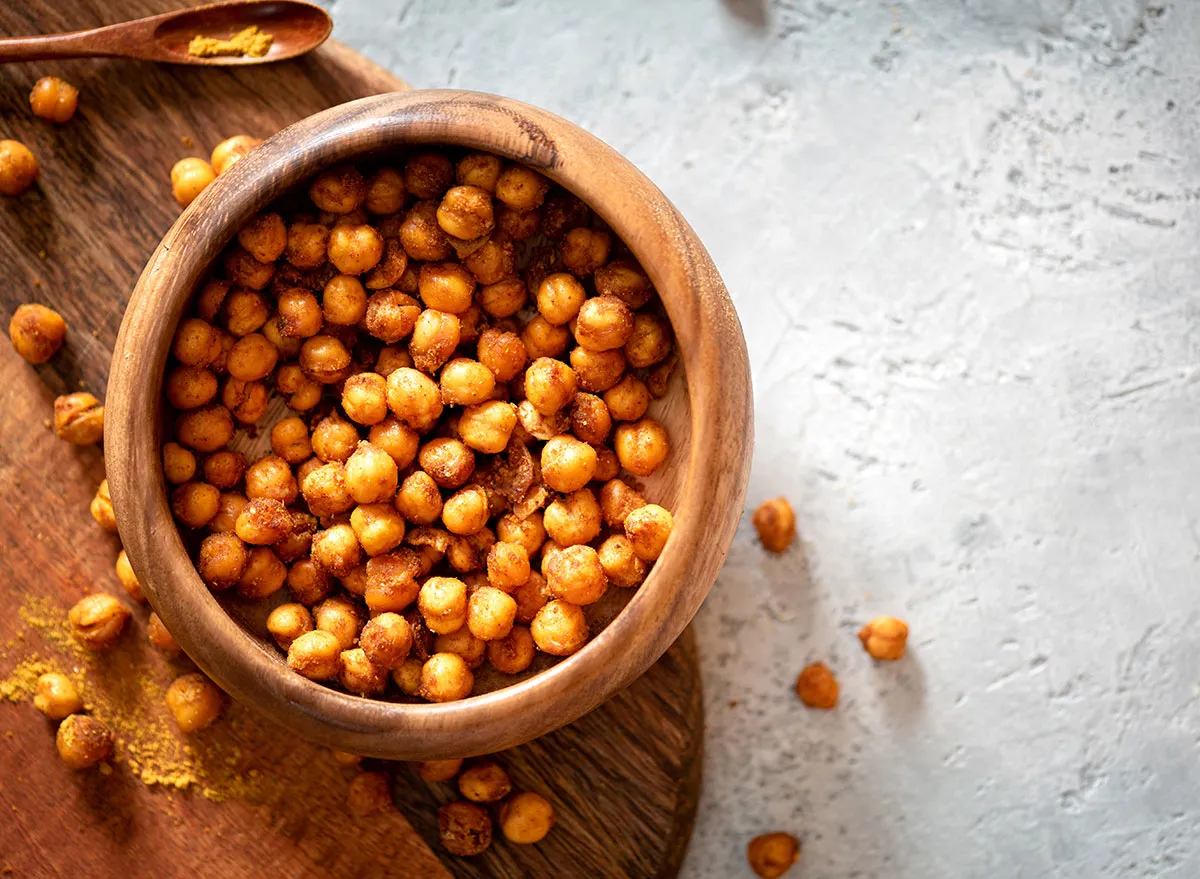
"A great weight-loss food is chickpeas," says Lisa Young, PhD, RDN, author Finally Full, Finally Slim, and a member of our medical expert board. "They contain both fiber and protein, two key nutrients that help you to feel full. This is the key to permanent weight loss— not being hungry."

chickpeas
Shutterstock

Pulses like chickpeas contain satiating protein to keep you full throughout the day by making your body produce more appetite-suppressing hormones, per an article published in Advances in Nutrition. The same study also illustrates that this legume has a low caloric content, making it a great way to increase your protein gains without packing on any extra fat.

Don't think that the fiber content of this plant doesn't help work a bit of magic too. A study found in Nutrients revealed that the fiber found in chickpeas also slows down the absorption of carbohydrates in your bloodstream, preventing sudden blood sugar spikes. Combine this advantage with the power of the bean's protein content, and you have an ingredient that can transform any meal into a dieter's dream. No wonder fiber is considered The #1 Thing To Eat Every Day To Lose Weight For Good.

The only thing left to think about is how to prepare the bean. Including this special legume into your diet couldn't prove easier, and with a bit of creativity, the sky's the limit when it comes to enjoying this ingredient.

"Chickpeas are also versatile and can be added to soups, salads, or veggie dishes or even puréed into a hummus," Dr. says Young. "I love chickpea salads made with avocado, red peppers, tomatoes, and drizzled with olive oil."

When you want to transform this powerful ingredient into a weight-loss centric meal, check out our 25 Healthy Chickpea Recipes That Can Help You Lose Weight and find that perfect recipe for lamb tagine, hummus, or slow cooker chili that tastes so good, you will want to come back for seconds. When in doubt, make sure to include some extra chickpeas into your life to jumpstart your weight loss goals and keep you feeling good throughout the day.

Get even more healthy tips straight to your inbox by signing up for our newsletter! After, read these next:

Adblock test (Why?)


The One Weight Loss Food to Eat to Always Feel Full, Says Dietitian | Eat This Not That - Eat This, Not That
Read More

Anushka Sharma Reveals She Eats Dinner By 6PM With Husband Virat Kohli - NDTV Food

The lives of our favourite celebrities are a source of much curiosity and intrigue among us. We often wonder how these stars stay in such ...