Rechercher dans ce blog

Sunday, July 3, 2022

Things I Ate During Eating Week - Defector

After my jaw blog published, many readers have commented asking for an update on how Eating Week went. I’m sorry to disappoint you all, but it was not the Eating Week that I had dreamed of. In fact, I only ate two of the 10 food items on my list. The plan, which was admittedly ambitious, involved going out to eat every night, downing plates of meaty pasta and Spanish tapas. That plan was not a success. I did go to one restaurant, and can confirm it was nice to get back to that familiar ritual, but it also took me nearly 45 minutes to eat half my sandwich.

I got my splint off on Tuesday, and I was so happy for about a half-hour—until I tried to eat for the first time and realized that now my back and side teeth were not touching at all. This is because the splint had been taking up space in between my top and bottom teeth, and without it sitting in the middle, it now felt almost harder to eat! My front teeth could touch, but my surgeon told me to be careful with those teeth and not to bite into anything hard or tough for a while.

After my oral surgeon removed my splint, and I struggled to eat my PBJ sandwich, I went down the hall to my orthodontist appointment. They twisted and tightened my wires so much that I cried twice and kicked the chair. I looked in the mirror and without the splint, it was obvious my upper jaw had been taken apart and rearranged. My two front teeth were now all crooked.
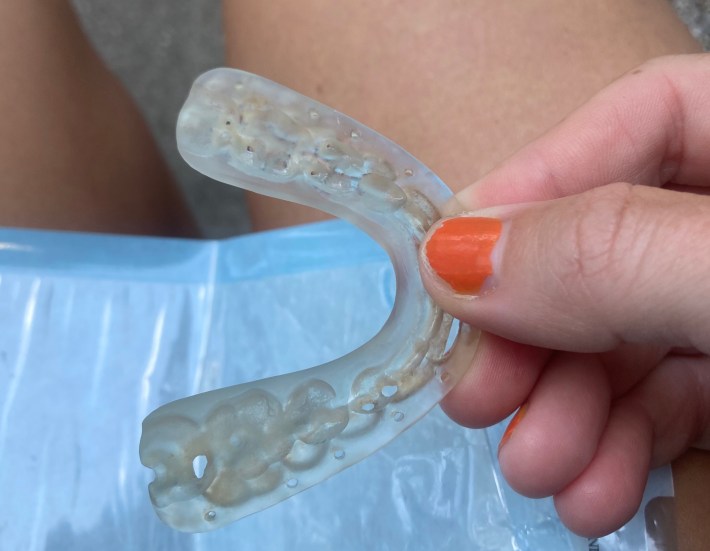
The splint. I’ve never smelled anything worse in my life than when this thing came out, covered in ramen chunks.

Despite the severe teeth pain (adult orthodontia is really so much worse than preteen) and wonky bite, I decided I would still try to eat the No. 1 item on my list: A Chicago dog.

So the next day, I went to my neighborhood hotdog stand for lunch and ordered a char cheddar dog with everything on it. I knew I should order a steamed dog, because that would be softer and chewier, but I couldn’t bring myself to do it. I feared ridicule from the hot dog stand employees, people that I had seen judge naive tourists for ordering a steamed dog. I had judged tourists for doing that and have corrected their orders before. A Chicago dog is never steamed!

Anyway, I ended up having to peel the charred skin off my dog and cut the inner dog into tiny pieces in order to actually eat it, but I did it! I also had to avoid the hard pieces of chopped onion, but the rest was delicious. The poppyseed bun, the sliced tomato, the cheese inside the dog melting onto the bun, the fresh relish. This dog was so much better than the closest I’d gotten to a hot dog two weeks earlier, which was when I ordered a plain hot dog bun (without the hot dog) at the Cubs game. (It was free). But my stomach did not enjoy the Chicago Dog, prompting me to try take it easy on greasy food for the rest of the week.
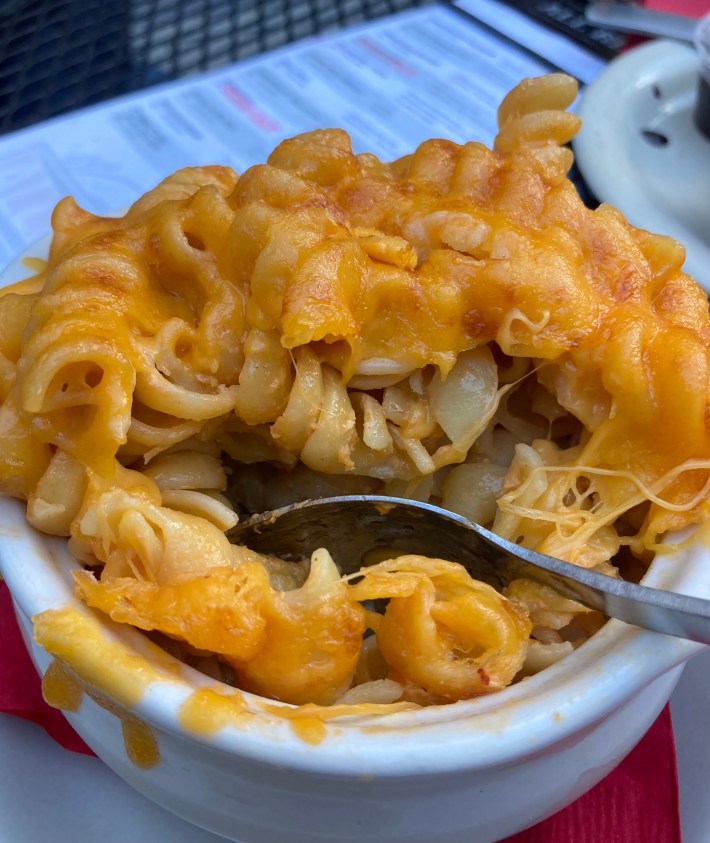
Mac and cheese!

Here’s a list of everything else I ate (or tried to eat) during Eating Week:

  • Four popsicles in one sitting (now I can open wide enough to lick a popsicle!)
  • Grilled chicken sandwich (my first chicken!)
  • Tagalong Girl Scout cookies (these had previously been too hard for me bite into).
  • Ritz Crackers (but after six crackers the salt hurt my tongue too bad to continue).
  • Turkey meatballs with couscous and broccoli (no more tiny pieces of rice getting stuck! Definitely could not chew the broccoli).
  • Angel food muffin
  • Peanut butter cookie
  • French fries
  • Mac and cheese with big noodles! (Had to avoid the stringy chewy cheese layer on top)
  • More rice
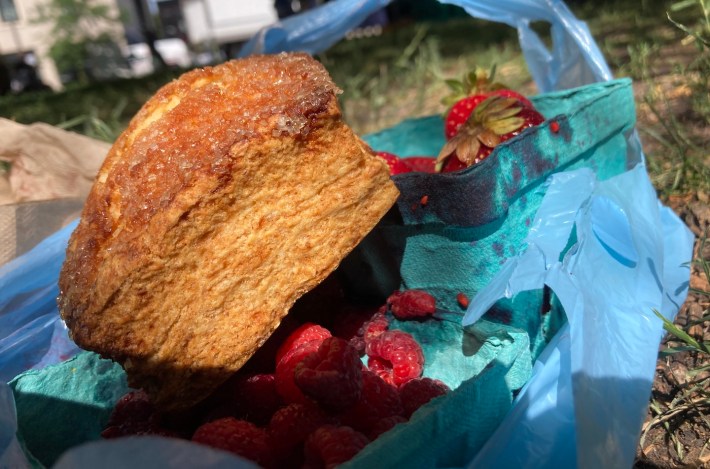
  • Honey lavender scone from the farmer’s market. This is my favorite scone of all time, the scone at which I had gazed longingly a few weeks earlier. I got out of bed at 9 a.m. on a Saturday (too early!!!) to make sure I could get this scone (it’s usually sold out by 10). It took me thirty minutes to eat it, but I did it and it was heavenly.
  • Fresh strawberries and raspberries
The Scone.

Much like Fork Friday, my expectations for Eating Week were unrealistic. So I now declare that Eating Week is Eating Month, and I’m hoping after a few days of some bland rice and chicken and riced cauliflower, I’ll be able to get to the juicy burger spot or the new Sicilian street food spot that are left on my list.

Recommended

Adblock test (Why?)


Things I Ate During Eating Week - Defector
Read More

4 Worst Drinks Slowing Your Metabolism, Say Dietitians — Eat This Not That - Eat This, Not That

Age, hormone shifts, and natural changes in muscle mass are just some of the factors that could be causing your metabolism to slow. While we can't do much about some of these natural progressions, there are several lifestyle factors that could be causing a slower metabolism, too. Many lifestyle habits, like what you eat, drink, and how much you sleep can influence your metabolism, and the good news is you have a say in improving these factors.

When it comes to what you're drinking, here are the four worst drinks slowing your metabolism. Read on, and for more, don't miss 4 Eating Habits That Slow Your Metabolism After 50, Say Dietitians.

Read the original article on Eat This, Not That!

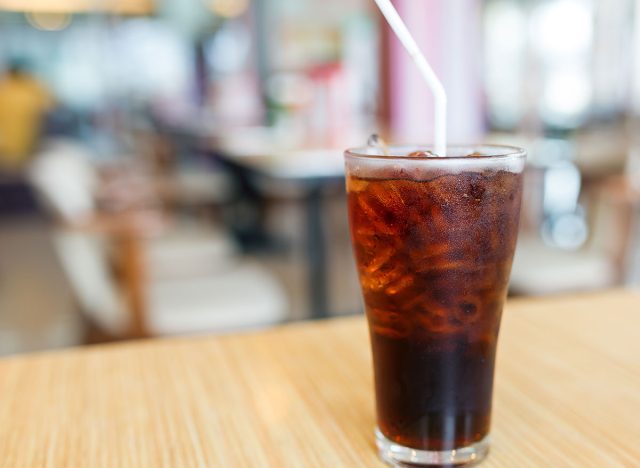
soda
Shutterstock

Whether soda, sweetened coffee or tea, juice, or your afternoon energy drink, beverages loaded with refined sugar could be causing your metabolism to slow. Not only can these types of drinks make weight loss more challenging, but they are also linked to several chronic conditions, like diabetes, fatty liver disease, obesity, heart attack, and stroke, according to Harvard Health.

While there is some mixed data on how sugary drinks impact metabolism, one study found when overweight and obese participants consumed 25% of their total calories from fructose-sweetened beverages, resting energy expenditure decreased significantly from baseline. It is important to note the fructose that naturally occurs in fruit is different than the fructose sweetener used in drinks, like high fructose corn syrup. While the fructose in fruit is not in question here, the processed fructose sweetener used in many beverages appears to be a factor leading to reduced metabolism.

Drink This! Tip: Try cutting out at least one of your sweetened drinks each day. Over time, you can reduce your intake more, and replace the sugary drinks with more healthful options, like water, unsweetened carbonated water, and unsweet tea.

Make better eating choices every day by signing up for our newsletter!

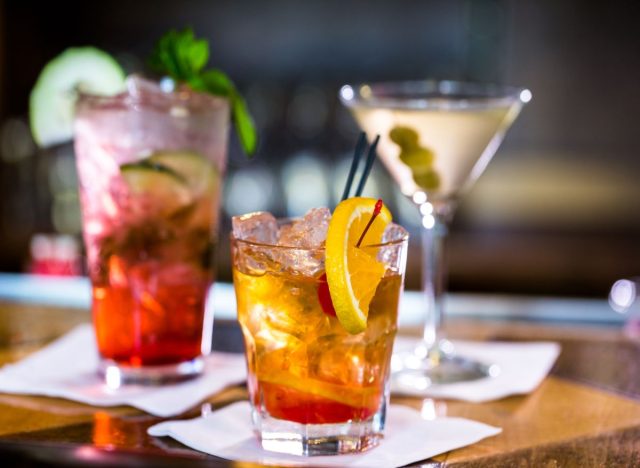
Assortment of Mixed Drinks
Shutterstock

This one gets a little tricky, but there is reason to think alcohol may be slowing your metabolism. First off, research indicates in small amounts, alcohol may actually increase metabolism for a short period of time after having a drink. However, outside of that acute period, alcohol may be impacting several factors that could potentially slow your metabolism.

For example, alcohol has been linked to poor quality sleep and duration, which can slow your metabolism. Additionally, alcohol can impair digestion and absorption of essential nutrients which may impact metabolism. Lastly, alcohol is dehydrating and may lessen your likelihood of participating in regular exercise, two factors that can individually impact your metabolism.

Drink This! Tip: Drink alcohol in moderation which is defined as two drinks or fewer per day for males, and one drink for females. Ensure you are well hydrated before having an alcoholic drink and try to limit added sugar in your beverages as well.

RELATED: 6 Incredible Effects Of Giving Up Alcohol for One Month

coffee
Shutterstock

While this may be a necessary adjustment for certain health concerns, decaffeinated drinks don't provide the same "jolt" to your metabolism. Caffeine is a natural stimulant, which can acutely increase your metabolism. If your body is used to caffeine on a regular basis, switching to decaf may naturally lead to a slower metabolism. Caffeine is found in a variety of drinks, from soda and coffee to energy drinks and tea, and frequent consumption of these drinks can boost metabolism throughout the day.

However, if you have cut caffeine for health reasons, you're doing the right thing for your body! Sure, the short metabolism boost following a cup of caffeinated coffee sounds like a perk, but if your caffeine consumption is impacting your overall health, swapping it for decaf is the right choice.

Drink This! Tip: To create a metabolism boost without caffeine, stay well hydrated, get frequent exercise, plan movement throughout the day and avoid long periods of sitting, avoid sugary drinks and excessive alcohol consumption, and make your sleep environment conducive to good quality sleep.

Man is dangerously eating junk food and cold drink while driving his car
Shutterstock

Sure, all beverages contain liquid that can aid in your hydration, but nothing is quite like drinking plain ol' water. If you find yourself loading up on non-water beverages, and you're only getting a sip or two of water by the end of the day, your lack of water could be causing your metabolism to slow. Water recommendations vary from person to person and depend on many different factors, like gender and physical activity. However, it is a good goal for women to consume at least 80 ounces of fluid per day, while men should have over 100 ounces.

Drink This! Tip: Match ounces of water to non-water ounces if you find yourself coming up short on your fluid targets. Eventually, you can aim to drink more water than other beverages combined. Also, try starting your day with a large glass of water to help hydration, and after each non-water drink you have, enjoy equal ounces of water and alternate throughout the day.

Adblock test (Why?)


4 Worst Drinks Slowing Your Metabolism, Say Dietitians — Eat This Not That - Eat This, Not That
Read More

Saturday, July 2, 2022

Food Court: David Goffin Reveals The One Food He Will Not Eat - ATP Tour

[unable to retrieve full-text content]

Food Court: David Goffin Reveals The One Food He Will Not Eat  ATP Tour
Food Court: David Goffin Reveals The One Food He Will Not Eat - ATP Tour
Read More

Eat Offbeat brings flavors of Senegal, Sri Lanka, Syria and more to Chelsea Market - Gothamist

The opening-day menu at Eat Offbeat — a brand new restaurant commanding a prime spot near the western entrance of Chelsea Market —  included Jollof Rice and Chicken Yassa prepared by Chef Mariama of Senegal, Katarica Curry and Dhal made by Chef Shanthini of Sri Lanka and Tahini Roasted Vegetables courtesy of Chef Diaa, a refugee from Syria.

It's a feast you probably wouldn't be able to assemble under one roof anywhere else in town — and that's not even mentioning Chef Lebjulet's Venezuelan dishes, nor Chef Bashir's Afghani treats — but Eat Offbeat is not your standard operation.

"We are a team of refugees and immigrants from around the world with a passion for cooking," Eat Offbeat's co-founder and CEO Manal Kahi told Gothamist. "We love food, and we love sharing food, and we love sharing our culture through food."

While running a physical storefront may be new for Eat Offbeat, the team has been feeding New York City since 2015: first as a successful catering business, then adding meal kits, packaged provisions and delivery when the pandemic hit. Still, Kahi admitted that being in Chelsea Market, a landmark destination for tourists, felt special.

"For the past seven years we've had an incredible level of support from our NYC customers, and we knew we were welcome," she said. "But now with this restaurant we feel like not only are we welcome, but now we're also a part of the basic fabric of the city" — and one fully on display for visitors from all over the world to see.

Eat Offbeat is a counter-service restaurant, and the menu is set up build-a-bowl style. You choose a well-seasoned base like Senegalese couscous or Afghani dill rice, a stew-like main dish that gets ladled on top, and, if you want even more pleasure in your life, a side or two. The place is still very much in soft-opening mode — they underestimated demand and sold out of about half their items early on their first day — but the plan is to add more options as well as grab-and-go items in the coming weeks.

The team of chefs prepare everything in a commercial kitchen up in Mott Haven, and it's all hearty, full-flavored food that travels well and sits well, the sorts of things about which you'd say "it's even better the next day" if you were lucky enough to have leftovers at home.

"Each dish is done by the chef who is from that country, so it's really representative of their own take on the recipe. It's authentic in that way," said Kahi. "For us, we don't pretend that we are giving you, like, the authentic jollof rice for all of Senegal, it's Chef Mariama's take on jollof rice. So it's all very personal. It's as if they were cooking for their families, except now it's a much, much more extended family."

Of five different dishes sampled on a visit after closing this week, everything was exceptional. The Chicken Yassa featured a mess of tender thigh meat in a mustardy sauce, the Venzuelan Caraotas Negras was robust and spicy, the Iraqi Sumac Salad bright and lively, the yellow Sri Lankan Dhal among the best versions I've ever had of that dish.

There are a few tables within the Eat Offbeat space, and a few more in the concourse, plus lots of outdoor seating on 16th Street through the semi-secret door next to the elevator. A few packaged snacks are available — the Sengalese Spiced Candied Peanuts are particularly good — with more to come in that department as well.

So Eat Offbeat is an instant Chelsea neighborhood go-to — if you work upstairs at Google, your lunch is sorted for the foreseeable future — but there's also a bigger picture here. "We have three goals in mind at Eat Offbeat," said Kahi. "The first is to create quality jobs for talented refugees who want to be in the food industry. The second is to build bridges, to connect us with customers eating our food in the home, the office, and now, at Chelsea Market. And the third goal ultimately is about changing the narrative around refugees, and around immigration. We're here to add value to the city."

Eat Offbeat is located within the Chelsea Market concourse, closer to the Tenth Avenue entrance and on the 16th Street side, and is currently open on Wednesday through Sunday from 11:00 a.m. to 6:00 p.m. (eatoffbeat.com)

Adblock test (Why?)


Eat Offbeat brings flavors of Senegal, Sri Lanka, Syria and more to Chelsea Market - Gothamist
Read More

Friday, July 1, 2022

You are what you eat | TSLN.com - Tri-State Livestock News

Cattle efficiently convert plant matter into natural protein. Much of this is grass, which can’t be consumed by humans.

Multi-national corporations and wealthy elite have pooled their money to create imitation meat, some that will even “bleed” fake blood. While bean burgers and Tofu products have been around for many years to cater to vegetarians, these latest lab creations are made from a long list of sometimes questionable and highly processed ingredients.

Scott Lively co-founder of Raise American isn’t a fan of the plant based meat products. “My issue is if you want a plant based diet, eat plants, why pretend that you are eating meat. Many are eating a trend not because it’s good. Some have like twenty-seven ingredients and they only disclose ten of them. It’s not plant based it’s science based.”


According to foodadditives.com, Methyl-cellulose (used in Beyond Meat Beyond Burger) is generally recognized as safe when used in accordance with good manufacturing practice. It is synthetically produced and can be used as an emulsifier or emulsifier salt, flavor enhancer, and stabilizer or thickener in food, cosmetics, pharmaceutical and other industries.

According to healthlines.com Sodium phosphate (an ingredient in 365 Everyday Value, Breaded Chickenless Nuggets) is an umbrella term that refers to multiple combinations of sodium (salt) and phosphate (an inorganic, salt-forming chemical). Food-grade sodium phosphate is recognized by the U.S. Food and Drug Administration (FDA) as safe for consumption in processed food. Another use is to prepare the human bowel prior to a colonoscopy. Some researchers have found sodium phosphate when used as a food additive, can impact health differently than naturally occurring phosphate. This is because it’s absorbed differently by the body. According to the abstract, high levels of phosphate may elevate mortality rates for the general public, as well as for those with kidney disease and cardiovascular disease. Researchers linked high phosphate levels to accelerated aging and vascular damage. The researchers recommended that people eat foods with naturally occurring phosphates, rather than those with added sodium phosphate.


TBHQ, or tert-butylhydroquinone, another common ingredient in imitation meat is a commonly used preservative in processed foods, particularly those containing fats or oils. It is banned in some jurisdictions due to being linked to immune dysfunction, protection against fat-induced cell death, and to both carcinogenic and cancer-protective mechanisms within the body. While in other countries including the United States, TBHQ is deemed safe and used in thousands of processed foods. Microwave popcorn, chips, chicken nuggets, and even some kinds of butter contain TBHQ. It acts as a preservative to prevent oils in these products from oxidizing, and its fat anti-peroxidation effects also prevent oils from going rancid. In small amounts it is deemed safe but diets heavy in processed food may exceed safe amounts.

On a quest to eliminate the need for animal farming, Pat Brown founded Impossible Foods, seeking to provide an environmentally friendly alternative to meat and dairy, directly from plants. Previously Brown was a world renowned geneticist, Howard Hughes Medical Institute Investigator, and Professor of Biochemistry at Stanford University. In Brown’s bio on Tedmed.com he explains how he uses biochemistry to trick plants into producing the same protein as meat “all while tasting just as delicious.”

Ethan Brown the founder and chief executive of Beyond Meat contends there are several main benefits to consuming plant-based foods instead of animal meat. It leads to fewer greenhouse gas emissions, it consumes fewer natural resources and it is better for human health. But for Mr. Brown, there is a more personal motivator. He would rather not be responsible for the deaths of animals. (New York Times article The ‘Hedonistic Altruism’ of Plant-Based Meat by By David Gelles, Aug. 27, 2021).

Most of these newer products use chemically extracted protein isolates or concentrates from soy or peas, rather than the whole beans themselves and rely on artificial colors to improve eye appeal.

While the California-based Impossible Foods might have had a humble beginning they quickly became the fastest growing plant based meat company with over two billion dollars invested in it. Investors in many of the companies have links to large corporations and overseas companies especially with Chinese ties, such as Horizons Ventures, the private investment arm of Mr. Li Ka-shing, a leading investor in some of the world’s most innovative companies and disruptive technologies, including Facebook, Waze, Spotify, Impossible Foods, Improbable and Zoom.

Other investors in the companies include Cari Tuna and Dustin Moskovitz, a co-founder of Facebook and Asana. And Biz Stone is an American entrepreneur and co-founder of Twitter. Beyond Meat is also backed by celebrity and athlete investors such as Leonardo DiCaprio, Jessica Chastain, Snoop Dogg, Liza Koshy, Chris Paul, Kyrie Irving and DeAndre Hopkins.

Tyson was an early investor in Beyond Meat and sold its shares (estimated to be worth $79 million) in 2019 on the eve of the vegan brand’s IPO to focus on its own plant-based offerings. Those products include the Raised & Rooted brand which Tyson initially launched in 2019.

The formerly popular investments have seen a steady decline in value. Beyond Meat stocks have fallen 84 percent from its peak of $152.58 in July of 2019 to a mere $24.42 in June of 2022. Many investors have lost millions. Supply chain issues have been blamed on some of the failures but the consumer demand has not grown as predicted.

Some see more of a future for Lab-grown meat, cultured meat grown from cells in a bioreactor, nourished by plant-based ingredients. The product allegedly has the same nutritional content as traditional meat.

Sean O’Keefe Present Professor, Department of Food Science and Technology, Virginia Polytechnic Institute and State University, Blacksburg, VA weighed in on some of the ingredients found in imitation meat products. “TBHQ is a synthetic antioxidant used to prevent oxidation, Polypropylene Glycol is a flavoring and absorbs moisture. Why is it there? Soy and pea proteins are not any healthier than beef, we need to be aware that these products are highly processed, high tech products with a lot of components in there. TBHQ is a synthetic antioxidant used to prevent oxidation, Polypropylene Glycol is a flavoring and absorbs moisture.”

O’Keefe feels that many individuals are insulated from where their food comes from and that we need to reconnect with our food sources. “I’m a food scientist and the simplest, closest to the farms is best, I personally don’t like the synthetic ingredients and I don’t feel that the imitation meat is sustainable. Natural is better for us and has been consumed for thousands of years. Nothing is more natural than an egg or a cow.”


Adblock test (Why?)


You are what you eat | TSLN.com - Tri-State Livestock News
Read More

If you can't beat 'em, eat 'em: Illinois fisheries rebrand the invasive Asian carp - WBUR News

If you can't beat 'em, eat 'em.

That may as well be the new battle cry for Illinois fishery managers trying to rebrand four invasive species of Asian carp as copi. They hope the new name will help the bountiful fish land on more restaurant menus and grocery lists. That could slow the carp’s march toward the Great Lakes, where they're expected to wreak ecological havoc by crowding out native species.

Illinois and other states in the region have spent hundreds of millions of dollars building dams and electric barriers to keep the invasive carp out of the lakes — now, they’re hoping to enlist Midwest appetites in the fight.

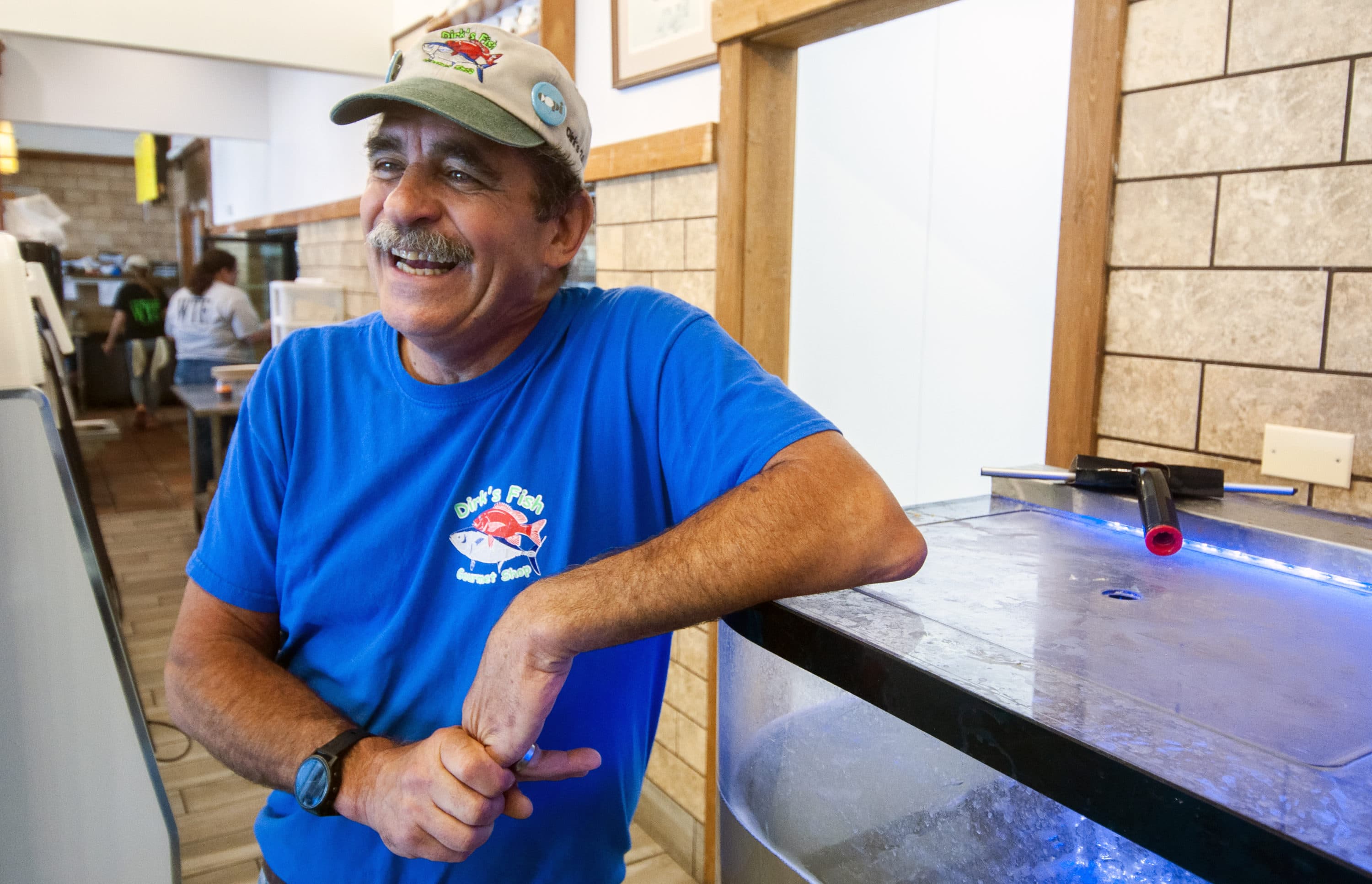
Dirk Fucik owns Dirk's Fish and Gourmet shop in Chicago, where he’s been serving the fish for a decade.

Dirk Fucik owns Dirk's Fish and Gourmet shop in Chicago. (Chris Bentley/Here & Now)

"I was just talking to my copi guy. He's working on it but I don't know if I'm going to get any until later in the week,” he says. “It’s still hard to get. I can’t just order it today for tomorrow consistently.”

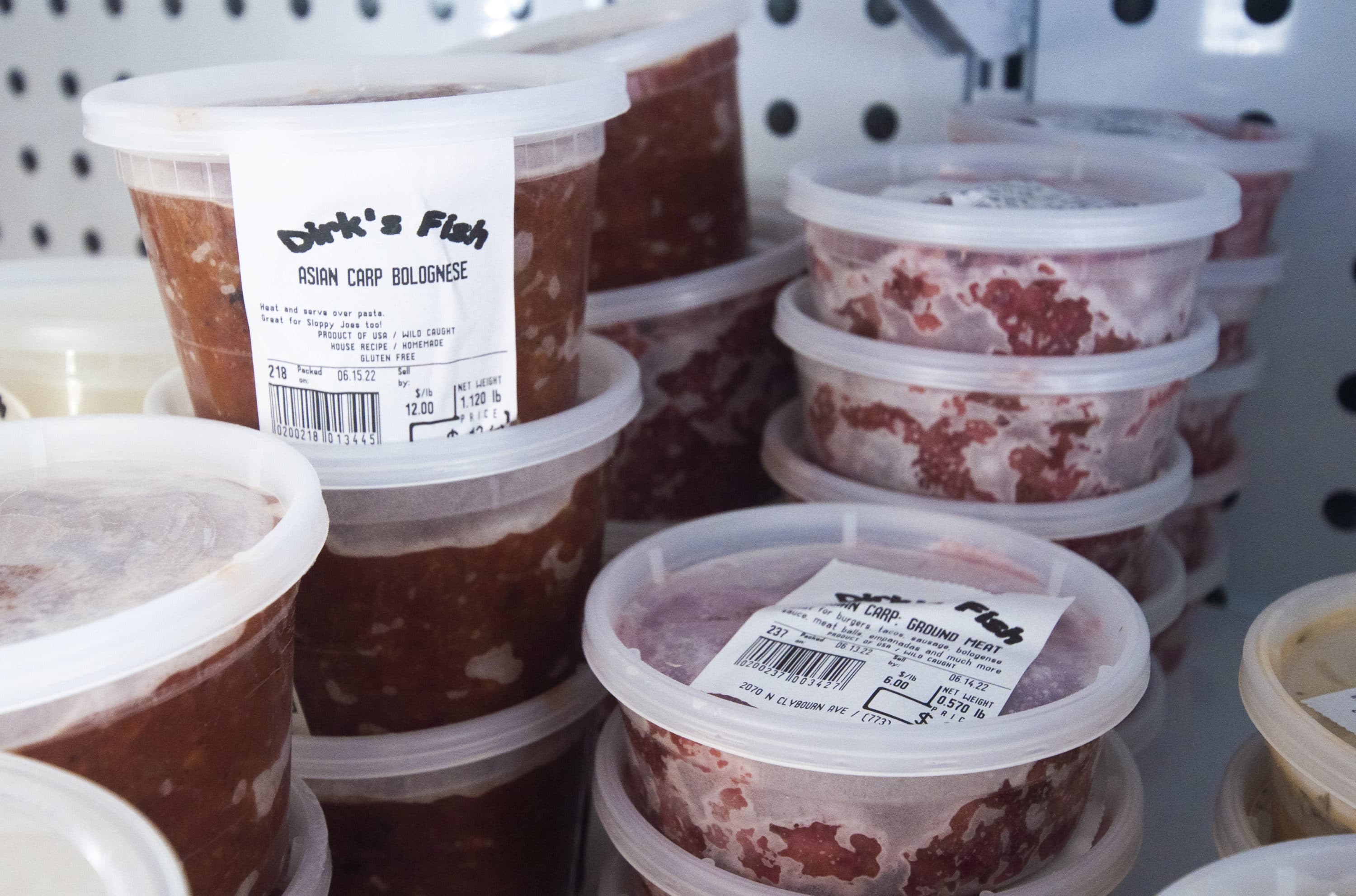
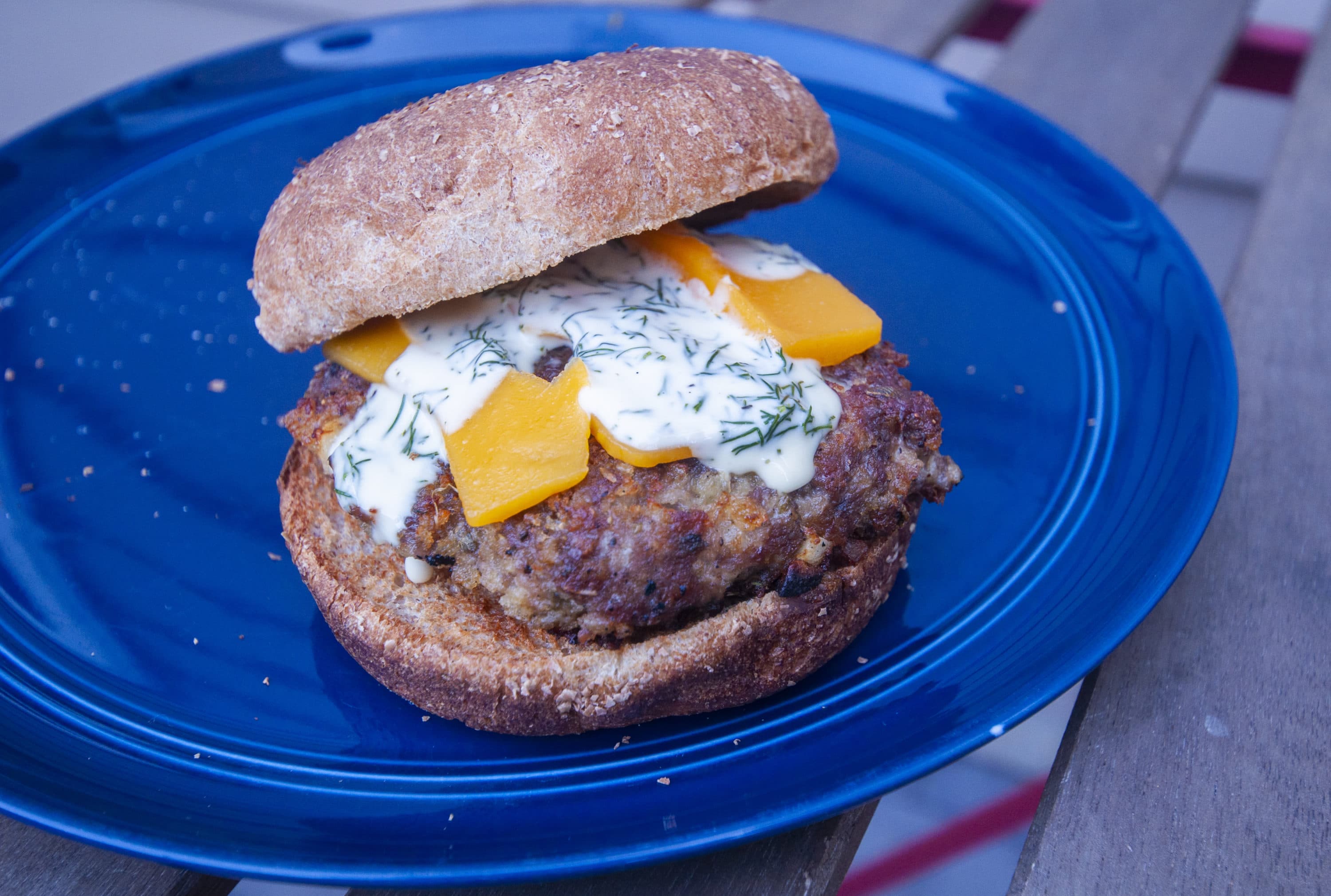
Dirk's has recipes for copi burgers, copi meatballs and a carp bolognese sauce for pasta.  Copi is even blended with whitefish and trout for a unique take on gefilte fish around Jewish holidays.

Fucik hopes the name change could net him some new customers.

“It’s sustainably harvested, local, light meat, fresh, flavorful, really nice,” he says.

Since Illinois announced the new name last week, Dirk's has sold out of the 30 pounds of copi that used to last a month. That's still small fry compared to other fish: Fucik says the shop sells 100 pounds of salmon a day. At $6 per pound, however, copi is about a quarter the price of salmon, making it a great deal in the world of fresh seafood, Fucik says.

But there's one problem for customers used to cooking fish filets.

"It’s got bones you don’t even know about in there,” Fucik says. “Everywhere you go you’re finding bones.”

His solution is to grind it up, which means copi is a better substitute for ground beef than cod or sole.

Asian carp bolognese in the freezer. Yum. (Chris Bentley/Here & Now)

Dirk's has been on board with eating and selling Asian carp for years, but even Fucik thinks Illinois appetites are no match for the surging fish population.

"Eliminating Asian carp is like digging a hole in dry sand,” he says. “It just keeps coming in around the edges as fast as you can dig.”

There is reason to hope, though, says Joe Roman, a conservation biologist at the University of Vermont who runs the website “Eat the Invaders.”

"When humans really like something they can be pretty good at eradicating or, at least, really reducing the numbers,” Roman says, pointing to the near-extinction of Atlantic cod in the 20th century.

And rebranding has helped create a market for other fish once considered unpalatable. Patagonian toothfish became Chilean seabass. Slimehead was reborn as orange roughy.

But Roman says there’s a risk the rebrand could be too successful.

"If people said, 'Wow copi is so good. Let's put it in our river,’ that would be a worst-case scenario," he says, because in the Great Lakes region, "extinction is a happy ending here.”

Asian carp make up to 70% of the biomass in the Illinois River, but there is evidence that fishing can control the population. Illinois partnered with commercial fishermen in 2012 to harvest millions of pounds of copi out of a portion of the Illinois River. In the area where it’s fished, Asian carp stocks have plummeted since then. Copi meat goes into fishmeal, fish oil, fertilizers and pet treats, not for human consumption, says Kevin Irons of the Illinois Department of Natural Resources.

“We did that intentionally not to compete with what we thought was a huge tool for the future, this human consumption, to work together in harmony with everything else to keep the fish out of the Great Lakes,” Irons says. "I really do believe that this may be our best hope.”

Now it's time to unleash that tool of the future. But why the name copi?

"Copi was really head-and-shoulders above everything else,” Irons says. “Being that these fish are copious, it just resonates really well, it seems kind of fresh. We think the name represented this fish as being a light, flaky fish, high in omega-3s. At the end it was kind of a no-brainer."

Not everyone agrees Asian carp needs a new name, though.

Angie Yu runs Two Rivers Fisheries in Wickliffe, Kentucky. The company processes millions of pounds of Asian carp caught in Illinois, Kentucky and Tennessee and ships it around the world.

“People around the world know this as Asian carp,” she says. They love it, Yu says, so she'll keep labeling the exports "Asian carp," not copi.

Yu grew up in China eating carp and was surprised to find people in the U.S. avoiding it.

“They are not trash, they are treasure," Yu says.

A copi burger. (Chris Bentley/Here & Now)

Asian grocery stores in some cities like New York, Los Angeles and Chicago already stock whole Asian carp. Yu hopes the new name and marketing push will help Two Rivers Fisheries find a larger domestic market beyond that.

American consumers often confuse the four species known collectively as Asian carp with another species, the common carp, which was imported from Europe in the 1800s. That fish is a bottom-feeder and can contain some funky flavors depending on where it has been. This is not the case for copi, which was brought to the U.S. in the 1960s or 70s and are not bottom-feeders. But the association looms large for some people.

Illinois will soon find out if a new name and marketing campaign can overcome that. Recipes like Dirk's copi burgers could help, too — especially when paired with a little tartar sauce.

Adblock test (Why?)


If you can't beat 'em, eat 'em: Illinois fisheries rebrand the invasive Asian carp - WBUR News
Read More

You are what you eat | TSLN.com - Tri-State Livestock News

Cattle efficiently convert plant matter into natural protein. Much of this is grass, which can’t be consumed by humans.

Multi-national corporations and wealthy elite have pooled their money to create imitation meat, some that will even “bleed” fake blood. While bean burgers and Tofu products have been around for many years to cater to vegetarians, these latest lab creations are made from a long list of sometimes questionable and highly processed ingredients.

Scott Lively co-founder of Raise American isn’t a fan of the plant based meat products. “My issue is if you want a plant based diet, eat plants, why pretend that you are eating meat. Many are eating a trend not because it’s good. Some have like twenty-seven ingredients and they only disclose ten of them. It’s not plant based it’s science based.”


According to foodadditives.com, Methyl-cellulose (used in Beyond Meat Beyond Burger) is generally recognized as safe when used in accordance with good manufacturing practice. It is synthetically produced and can be used as an emulsifier or emulsifier salt, flavor enhancer, and stabilizer or thickener in food, cosmetics, pharmaceutical and other industries.

According to healthlines.com Sodium phosphate (an ingredient in 365 Everyday Value, Breaded Chickenless Nuggets) is an umbrella term that refers to multiple combinations of sodium (salt) and phosphate (an inorganic, salt-forming chemical). Food-grade sodium phosphate is recognized by the U.S. Food and Drug Administration (FDA) as safe for consumption in processed food. Another use is to prepare the human bowel prior to a colonoscopy. Some researchers have found sodium phosphate when used as a food additive, can impact health differently than naturally occurring phosphate. This is because it’s absorbed differently by the body. According to the abstract, high levels of phosphate may elevate mortality rates for the general public, as well as for those with kidney disease and cardiovascular disease. Researchers linked high phosphate levels to accelerated aging and vascular damage. The researchers recommended that people eat foods with naturally occurring phosphates, rather than those with added sodium phosphate.


TBHQ, or tert-butylhydroquinone, another common ingredient in imitation meat is a commonly used preservative in processed foods, particularly those containing fats or oils. It is banned in some jurisdictions due to being linked to immune dysfunction, protection against fat-induced cell death, and to both carcinogenic and cancer-protective mechanisms within the body. While in other countries including the United States, TBHQ is deemed safe and used in thousands of processed foods. Microwave popcorn, chips, chicken nuggets, and even some kinds of butter contain TBHQ. It acts as a preservative to prevent oils in these products from oxidizing, and its fat anti-peroxidation effects also prevent oils from going rancid. In small amounts it is deemed safe but diets heavy in processed food may exceed safe amounts.

On a quest to eliminate the need for animal farming, Pat Brown founded Impossible Foods, seeking to provide an environmentally friendly alternative to meat and dairy, directly from plants. Previously Brown was a world renowned geneticist, Howard Hughes Medical Institute Investigator, and Professor of Biochemistry at Stanford University. In Brown’s bio on Tedmed.com he explains how he uses biochemistry to trick plants into producing the same protein as meat “all while tasting just as delicious.”

Ethan Brown the founder and chief executive of Beyond Meat contends there are several main benefits to consuming plant-based foods instead of animal meat. It leads to fewer greenhouse gas emissions, it consumes fewer natural resources and it is better for human health. But for Mr. Brown, there is a more personal motivator. He would rather not be responsible for the deaths of animals. (New York Times article The ‘Hedonistic Altruism’ of Plant-Based Meat by By David Gelles, Aug. 27, 2021).

Most of these newer products use chemically extracted protein isolates or concentrates from soy or peas, rather than the whole beans themselves and rely on artificial colors to improve eye appeal.

While the California-based Impossible Foods might have had a humble beginning they quickly became the fastest growing plant based meat company with over two billion dollars invested in it. Investors in many of the companies have links to large corporations and overseas companies especially with Chinese ties, such as Horizons Ventures, the private investment arm of Mr. Li Ka-shing, a leading investor in some of the world’s most innovative companies and disruptive technologies, including Facebook, Waze, Spotify, Impossible Foods, Improbable and Zoom.

Other investors in the companies include Cari Tuna and Dustin Moskovitz, a co-founder of Facebook and Asana. And Biz Stone is an American entrepreneur and co-founder of Twitter. Beyond Meat is also backed by celebrity and athlete investors such as Leonardo DiCaprio, Jessica Chastain, Snoop Dogg, Liza Koshy, Chris Paul, Kyrie Irving and DeAndre Hopkins.

Tyson was an early investor in Beyond Meat and sold its shares (estimated to be worth $79 million) in 2019 on the eve of the vegan brand’s IPO to focus on its own plant-based offerings. Those products include the Raised & Rooted brand which Tyson initially launched in 2019.

The formerly popular investments have seen a steady decline in value. Beyond Meat stocks have fallen 84 percent from its peak of $152.58 in July of 2019 to a mere $24.42 in June of 2022. Many investors have lost millions. Supply chain issues have been blamed on some of the failures but the consumer demand has not grown as predicted.

Some see more of a future for Lab-grown meat, cultured meat grown from cells in a bioreactor, nourished by plant-based ingredients. The product allegedly has the same nutritional content as traditional meat.

Sean O’Keefe Present Professor, Department of Food Science and Technology, Virginia Polytechnic Institute and State University, Blacksburg, VA weighed in on some of the ingredients found in imitation meat products. “TBHQ is a synthetic antioxidant used to prevent oxidation, Polypropylene Glycol is a flavoring and absorbs moisture. Why is it there? Soy and pea proteins are not any healthier than beef, we need to be aware that these products are highly processed, high tech products with a lot of components in there. TBHQ is a synthetic antioxidant used to prevent oxidation, Polypropylene Glycol is a flavoring and absorbs moisture.”

O’Keefe feels that many individuals are insulated from where their food comes from and that we need to reconnect with our food sources. “I’m a food scientist and the simplest, closest to the farms is best, I personally don’t like the synthetic ingredients and I don’t feel that the imitation meat is sustainable. Natural is better for us and has been consumed for thousands of years. Nothing is more natural than an egg or a cow.”


Adblock test (Why?)


You are what you eat | TSLN.com - Tri-State Livestock News
Read More

Anushka Sharma Reveals She Eats Dinner By 6PM With Husband Virat Kohli - NDTV Food

The lives of our favourite celebrities are a source of much curiosity and intrigue among us. We often wonder how these stars stay in such ...