As a cardiologist who has treated thousands of patients, one of the most common health concerns I come across is high cholesterol. But the solution doesn't always have to come from a pill, which can have side effects.
The foods we eat play a major role in keeping those cholesterol numbers low. The best part is that you don't have to put tons of restrictions around your diet in order to see positive changes.
Although there is great individual variation to dietary cholesterol, just making a few tiny improvements in your eating habits can yield significant reductions in LDL cholesterol — or the "bad" cholesterol that contributes to fatty buildups in arteries.
Here are five inexpensive foods I eat regularly to help lower cholesterol and keep my heart healthy:
1. Oatmeal and oat bran
2. Almonds
A 2018 study found that almonds can lower LDL cholesterol while maintaining or even increasing HDL cholesterol — or the "good" kind that helps remove other forms of cholesterol from your bloodstream.
Chia seeds supply plenty of essential omega-3 fatty acids. Increasing consumption of these healthy fats by even one gram per day has been associated with a 16% reduction in the risk of cardiovascular issues.
Although omega-3 fatty acids have relatively little effect on LDL, they can help raise HDL cholesterol and help lower triglycerides, a type of fat found in your blood.
4. Broccoli
Studies have demonstrated a connection between consuming vegetables and reducing the risk of heart disease.
Broccoli in particular is plentiful in soluble fiber, which does wonders for high cholesterol. Other cholesterol-busting vegetables to consider include spinach, Brussels sprouts and collard greens.
In addition to supplying a multitude of vitamins and antioxidants, eating vegetables regularly has been shown to help lower cholesterol, with higher intakes associated with progressively lower LDL levels.
5. Watermelon
Swap the sugar snacks for some sweet watermelon if you want to lower your cholesterol. Watermelon naturally contains lycopene, which has lipid lowering properties, reducing total and LDL cholesterol.
Crown & Anchor is an entertainment and nightlife complex with clubs, bars and restaurants all nearby. The Inn allows visitors to stay right in the middle of the action.
Features: Fireplace, flat screen TV, private balcony, heated pool.
A Provincetown staple, The Canteen is a casual eatery that serves the classics: lobster rolls, clam chowder and fish and chips (plus treats like whoopie pies!) in a 200-year-old building reminiscent of an old seafood shack.
There is some evidence that shows your blood type has an effect on your health. General heart health is one example since the American Heart Association found that people with type A, type B or type AB blood are more likely than those with type O to have a heart attack. But it's not all good news for type Os. Another study conducted in 2019 concluded that people with type O blood are more likely to be bitten by mosquitos. (Hey, you can't win 'em all.)
There is also a faction of people who believe that eating a certain diet based on your blood type can lead to better health and a reduced risk of certain diseases. This nutrition philosophy was popularized by a naturopathic physician named Dr. Peter D'Adamo and outlined in his 1996 book Eat Right 4 Your Type. The diet guide landed on the New York Times Bestseller list and has since sold millions of copies.
But will changing your diet based on your blood type actually make you healthier? The science behind D'Adamo's guide has been mostly debunked -- or at the very least, largely unconfirmed to date. I asked Anna Rios, a Registered Dietitian Nutritionist, about the nutrition plan and any benefits or potential dangers associated with eating for blood type.
But first, here's what the Blood Type Diet is and how it portends to make you healthier.
Eating for blood type: The Blood Type Diet explained
D'Adamo's 1996 book made waves when it came out, but there is little evidence to support the idea that eating a blood type-specific diet will improve health.
D'Adamo Personalized Nutrition
The general thrust of the Blood Type Diet is that there are optimal foods for people with various blood types O, A, B and AB. Part of the claim hinges on the idea that blood types serve as maps of our ancestral history and genetics, and that the foods commonly eaten by our ancestors are better suited for our bodies, even in the modern day.
Below is a snapshot of the four main blood types and what D'Adamo posits is the best type of diet for each.
Type A: The agrarian or cultivator. According to D'Adamo, those with type A blood should avoid meat -- specifically red meat -- and eat a plant-based diet rich in fresh fruits, vegetables, legumes and whole grains. Because of more "sensitive immune systems," they should also avoid processed foods and opt for organic foods whenever possible.
Type B: People with blood type B are dubbed "nomads" by D'Adamo. Folks with type B are encouraged to eat plants but also most meats (except chicken). The diet also cautions against eating corn, wheat, tomatoes, peanuts and certain seeds.
Type AB: People with type AB blood, or "enigmas" as D'Adamo calls them, are a mix between types A and B. The Blood Type Diet encourages these people to eat seafood, tofu, dairy, beans, greens and grains but to avoid corn, beef and chicken. D'Adamo contends type ABs also have lower levels of stomach acid and thus should avoid caffeine and alcohol.
Type O: Also known as the "hunter," D'Adamo purports that people with this blood type should eat a high protein diet rich in red meat, fish, poultry and some fruits and vegetables. This precursor to the paleo diet cautions type Os against eating grains, legumes and dairy products.
According to the Blood Type Diet, type Os require more meat in their diets than other blood types.
Istetiana/Getty Images
Does the Blood Type Diet actually work?
To date, there is very little evidence that adhering to strict blood type-based diet recommendations will improve health outcomes. "The blood type diet has been debunked multiple times by new and improved research," Rios says. "People who claim to start feeling better on this diet typically do so because they start cooking at home more and eating more whole foods and less processed foods which can improve anyone's health."
The most comprehensive study was done in 2013 by the American Journal of Clinical Nutrition and found "no evidence to validate the purported health benefits of blood type diets." That said, most of the nutrition plans laid out in D'Adamo's book may be healthier than your current eating habits since they do focus on natural, whole and unprocessed foods.
D'Adamo suggests folks with type A blood are healthiest when adhering to a plant-based diet rich in fresh fruits and vegetables.
summerphotos/Getty Images
When it comes to health, does blood type matter at all?
Blood type isn't something dietitians take into consideration when providing medical nutrition therapy, Rios says. "As dietitians, we focus on the patient as an individual," she adds. "Important things to consider include health history, chronic illnesses, current lifestyle, food allergies, food intolerances, sensitivities, stress and digestion."
Should you try the Blood Type Diet? Is it safe?
Following the Blood Type Diet can be "extremely restricting," Rios says, and, if you aren't being guided by a registered dietitian, it could lead to other health issues. There are lots of things to consider before excluding certain food groups from your diet.
If you have or are at risk for high blood pressure or heart disease, for instance, eating a diet high in red meat (as the type O diet suggests) could lead to problems. Diabetics, on the other hand, are often advised to avoid eating cheese, dairy and other foods in large amounts. Other health conditions including IBS and iron deficiency can be exacerbated by meticulously consuming or avoiding certain categories of foods.
The bottom line on the Blood Type Diet
While trying a nutrition plan outlined for your blood type shouldn't have any drastic negative consequences (at least not for those without underlying health conditions), there is also very little evidence that doing so will improve your health in any significant way.
Most nutrition experts suggest balance in the diet overall, including a mix of lean proteins and vitamin-rich vegetables along with whole grains, nuts and seeds. For losing weight, diets such as the keto and paleo plans have been known to garner fast results, but if the goal is overall improved health, including heart health, restrictive fad diets often get failing grades from nutritionists, dietitians and other health professionals.
So what is the healthiest diet?
If you're looking for a nutrition plan or diet to follow for increased overall health, the Mediterranean Diet has been ranked the No. 1 healthiest diet by US News and World Report for five straight years. Based largely on typical Mediterranean-style cooking, this nutrition plan includes lots of lean fish, fruits, vegetables, whole grains, beans and seeds. It also encourages limited sugar and salt intake and prioritizes healthy fats like olive oil.
Read more on health and wellness
The information contained in this article is for educational and informational purposes only and is not intended as health or medical advice. Always consult a physician or other qualified health provider regarding any questions you may have about a medical condition or health objectives.
Processed meats like bacon, hot dogs, pepperoni, and salami are sources of cholesterol oxidation products (COPs). When you microwave processed meats, the cholesterol in the meat oxidizes and degrades. According to an article published in the National Library of Medicine, these COPs can lead to chronic health conditions, including atherosclerosis (the hardening of the arteries, which transport blood all over your body).
All animal products emit some amount of cholesterol — and many of these products need to be heated to make the food safe for human consumption. The microwave is particularly dangerous because it amplifies COP production. The aforementioned article also revealed pork products like bacon were particularly high in COPs after they were cooked, refrigerated, and reheated in the microwave. Grilling, followed by reheating in the microwave, is also a serious COP offender.
You can reduce your exposure to COPs by reheating processed meats on the grill rather than in the microwave. We recommend starting your bacon in simmering water until the water evaporates before frying the bacon until crisp. This method retains moisture and creates a soft, chewy, and delectable bacon.
Healthy snacks teens will actually enjoy eating (Alamy/PA)
It can be tough to get teenagers to eat healthily, but reaching for ultra-processed alternatives could be a slippery slope.
New research suggests sweets, pastries and desserts could be “gateway” foods for teens, leading them to eat higher quantities of other unhealthy foods.
The study – presented at the American Heart Association’s Hypertension Scientific Sessions in San Diego – was led by Maria Balhara, a 16-year-old student at Broward College in Davie, Florida, who says: “Ultra-processed foods are designed to be hyper-palatable, or engineered to be as addictive as possible. They’re also cheap and convenient, which makes them hard to resist. Most people are eating too many of these foods without realising it.”
Balhara gathered data on how frequently 315 teens consumed 12 types of ultra-processed foods (including chips, chocolate and white bread) over a period of eight weeks, along with their estimated consumption of the same foods in 2019 (before the pandemic). She found candy, pre-packaged pastries and frozen desserts acted as a possible “gateway” to driving consumption of other ultra-processed foods. The logic works the other way as well – for example, decreased consumption of white bread was associated with a 9% decrease in consumption of all other ultra-processed foods.
(Alamy/PA)
“The good news is that even small changes, such as reducing how often you eat a few gateway foods, may reduce overall consumption of unhealthy foods and have a big impact on your overall health,” says Balhara.
Kate Shilland, registered sports and public health nutritionist at Performance Canteen (performancecanteen.co.uk), says: “People tend to think snacking is bad. It’s not, it’s good. Teens need to eat regularly to keep blood sugar levels stable and to keep concentration and mood up. They are not only studying, playing sport (or PlayStation) but growing too – this requires regular energy.”
Helena Gibson-Moore, nutrition scientist at the British Nutrition Foundation (nutrition.org.uk), agrees, saying: “If teenagers are hungry between meals, then healthy snacks can form part of a healthy, balanced diet, and can be a useful way for teenagers to get essential nutrients like protein, fibre, and vitamins and minerals they need for good health.”
For both, it’s all about what you snack on. Shilland says: “Protein and fibre-rich carbs are best to include, as they’ve been shown to keep you fuller and more satisfied for longer.” That doesn’t mean you should ban teens from having the odd treat, though, Shilland adds: “It is also important not to make teens feel guilty if it is more of a biscuit kind of day. We all have them, and showing disapproval or making them feel guilty about what they are eating generally leads to less positive behaviours around food.”
Snacking on fruit and veg is always a good idea, but if that doesn’t exactly set your teen’s world alight, here are some other options to try…
(Alamy/PA)
Nuts and seeds
Gibson-Moore recommends having a small handful of unsalted mixed nuts or seeds, as they “provide protein, fibre and healthy fats”.
Buying nuts from the supermarket can add up, so why not bulk-buy different varieties online to save some money? You could even make your own mixes of nuts and seeds – perfect for on-the-go snacking.
Cottage cheese – but not as you know it
Cottage cheese might not sound like the world’s most appealing snack, but it’s all about what you do with it. Shilland’s on a mission “to make cottage cheese more appealing”, saying: “Mixed with edamame/peas/spring onion and avocado and chilli flakes, or topped with cherry tomatoes and dukkha spice is amazing.”
It’s the perfect snack, because it’s “high protein and fibre rich”, keeping you “full for ages”, she says.
Pitta and hummus
A crowd-pleaser of a snack, Gibson-Moore suggests upping the healthiness of this one by using “wholemeal pitta bread with reduced-fat hummus”, which is a good source of fibre.
If you really want your teen to up their fibre intake, Gibson-Moore is also a big fan of having a slice of malt loaf, calling it “a tasty fibre provider”.
Rice cakes
A handy and relatively low-cost thing to have in your cupboard, Shilland recommends topping yours with peanut butter and avocado for a snack that is “both nutrient-rich and filling”.
Yoghurt
Gibson-Moore calls low-fat and lower-sugar yoghurts “a good source of calcium, which is needed for the maintenance of normal bones and teeth”. She continues: “Add seeds and fruit for an extra nutrient boost.”
Sandwiches
While you might want to steer clear of ultra-processed white bread, that doesn’t mean sandwiches are off the table. You could use wholemeal varieties or wraps, and Shilland suggests adding “lean protein and some colour, eg. chicken salad sandwich, wrap with falafel, hummus and salad.
“You [could] split the sandwich in two – one half in the morning, the other later in the day.”
The U.S. ate nearly 110 pounds of potatoes per capita in 2019, according to the most recent statistics from the Food and Agriculture Organization. You might say that makes us a nation of Mr. and Mrs. Potatoheads. However, being such savants of the starchy tubers, it's hard to imagine we don't know everything about potatoes and health.
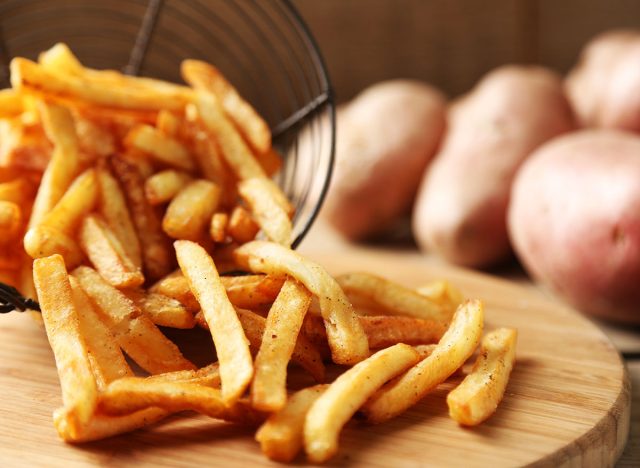
For instance, when many think of "carbs," potatoes are perhaps among the first foods that come to mind. Also, most people are probably aware of the fact that potato-forward dishes like French fries are not as healthy as—say, carrot sticks—and can increase your risk of developing cardiovascular disease due to their high fat and salt content if eaten in excess.
But while potatoes often get a bad rap, the truth is they are actually nutrient-dense vegetables, providing the body with complex carbohydrates and other important nutrients.
With the skin on, a medium, 213-gram potato is about 164 calories and provides 4.5 grams of fiber, nearly 20% of your daily potassium needs, 46% of your daily vitamin C needs, and 4.4 grams of plant-based protein. In addition to an abundance of other nutrients, it's also a good source of vitamins, including vitamin B6 (37% DV).
"Many people think sweet potatoes are better for you, but that's actually not true," says Amy Goodson, MS, RD, CSSD, LD, author of The Sports Nutrition Playbook, and member of our expert medical board. "The nutrition lines up pretty closely with white potatoes being higher in potassium, and sweet potatoes being higher in beta-carotene, giving them their orange color."
So, what are things you probably don't know about tater tots and their lot? Here are some of the things that happen to your body when you eat potatoes.
Shutterstock
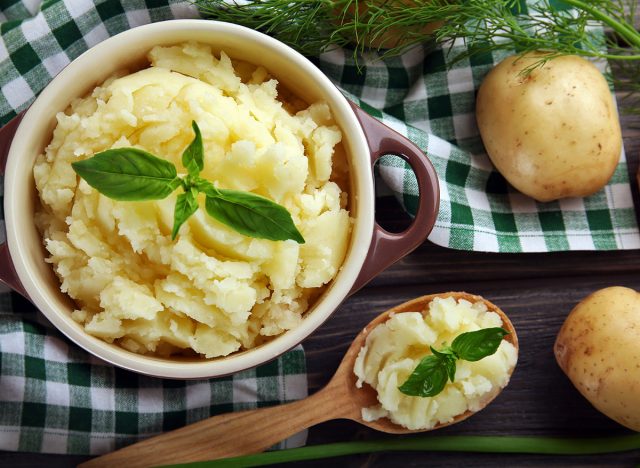
If you're worried about those piping hot mashed potatoes raising your blood sugar, let them cool off before eating. When you eat potatoes that are hot, their starches are quickly digested into glucose, which raises your blood sugar. But when cooked potatoes are allowed to cool, their starches change into what's known as a type 3 resistant starch, which acts as both soluble and insoluble fiber in that it can't be digested—hence its name.
In resisting digestion, the sugars from this starch are not absorbed into the bloodstream. Instead, the resistant starch moves into the large intestine, where it is broken down by healthy bacteria, and as a prebiotic, it feeds your gut microbiota. Keeping your gut microbiota healthy can reduce your risk of developing a number of health conditions, including inflammation, irritable bowel syndrome (IBS), and even colon cancer.
Sign up for our newsletter!
Shutterstock
Low in calories, high in water content, and with moderate amounts of fiber and protein, when prepared with health and wellness in mind, a serving of potatoes can be good for weight loss, especially when you consider how filling they are.
Boiled potatoes scored a 323 rating on the Satiety Index of Common Foods, the highest for the satiety of the 38 foods tested, which is higher than other satisfying foods like eggs, beans, steak, and fish. In a 2018 study titled "Subjective Satiety Following Meals Incorporating Rice, Pasta and Potato," researchers compared participants' feelings of fullness after eating meals that included these foods and found that people felt less hungry as well as more full and satisfied after eating meals with potatoes.
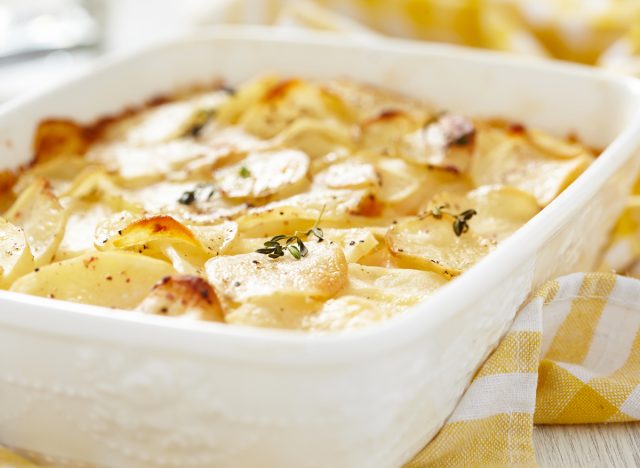
Potatoes on their own aren't very high in calories. But how they're prepared and the portion sizes you eat ultimately makes a difference in terms of their potential nutritional value and propensity to cause weight gain. For example, a one-cup serving of butter-based potatoes au gratin, which typically includes breadcrumbs, cheddar cheese, and milk reportedly contains 323 calories and 11.6 grams of saturated fat.6254a4d1642c605c54bf1cab17d50f1e
The regular consumption of French fries has also been known to cause weight gain. For instance, a 2007 study from The American Journal of Clinical Nutrition found that eating fried foods like French fries was directly linked to obesity. The likelihood of gaining weight is further exacerbated if—like many others—you order fries alongside a fast-food entrée. A large order of fries from McDonald's contains 500 calories, which is only 40 calories less than that of its signature Big Mac. Between this burger and a large order of French fries, lunchtime at the golden arches could become a 1000+ calorie affair.
Shutterstock
Anytime you eat carbohydrates, your blood sugar may rise. Elevated blood sugar over time can lead to prediabetes, insulin resistance, and Type 2 diabetes. If eaten regularly, fried potatoes, like French fries or chips, may increase your risk for diabetes, high blood pressure, and heart disease.
According to Goodson, even those highly satisfying, nutritious boiled and baked potatoes can elevate blood sugar and increase diabetes risks—but so can other healthy carbs like oatmeal, brown rice, and whole grain bread.
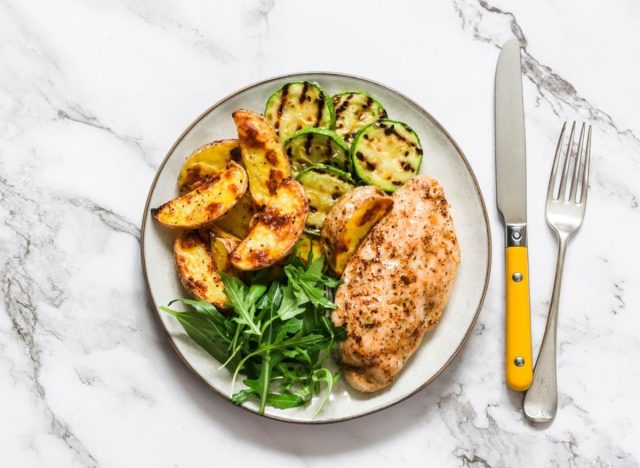
"The key is to pair potatoes and other carbs with a protein like lean beef, chicken, fish, or eggs," Goodson advises. "Protein helps slow down digestion, and thus helps to flatten the blood sugar curve preventing a spike."
Potatoes' potential impact on your brain health again essentially boils down to how they are cooked.
"Deep-fried potatoes and other deep-fried foods have been linked in studies to weakening focus, increasing memory impairment, and also increasing inflammatory responses in the brain," says Mary Wirtz, MS, RDN, a registered dietitian and consultant for MomLovesBest.
Similar to foods and beverages that are high in added sugars, when potatoes are fried, they are more likely to have an adverse effect on memory and cognition. For example, one study published in the Journal of Nutritional Science demonstrated that participants whose diets included the most fried foods scored the lowest on tests of memory and cognition.
"Consuming too much of these foods can result in cellular damage and inflammation, which can speed up the aging process. The inflammatory response in the skin is seen in visible signs of weakened skin elasticity—wrinkles, puffiness, and acne," says Burdeos.
Obviously, taking the skin off potatoes and soaking them in oil to fry them may not be the healthiest way to eat them. However, if you must have your fries, Goodson suggests leaving the skin on your potato, then air frying them or roasting them in the oven.
According to Goodson, a medium potato is a nutrient-rich source of carbohydrates, providing the body with about 26 grams of complex carbohydrates to help fuel exercise. Again, keep in mind that this tater-consuming benefit comes from choosing the right potato prep—think boiled or baked.