Rechercher dans ce blog

Monday, September 12, 2022

Things to Never Do After Age 55 Say Experts — Eat This Not That - Eat This, Not That

We all know as we age our bodies change whether we like it or not, but there's certain bad habits that can hurt us even more in our 50s than in our previous younger years. Although we may look and feel younger, our bodies need more care and attention as we age and Eat This, Not That! Health spoke with experts who reveal seven things to stop immediately after 55 and why. Read on—and to ensure your health and the health of others, don't miss these Sure Signs You've Already Had COVID.

drinking alcohol
Shutterstock

Dr. Suzanna Wong, a licensed Doctor of Chiropractic and health expert with Twin Waves Wellness says, "The single most important thing for people over 55 to stop doing is drinking lots of alcohol. Alcohol is metabolized differently to food, and it causes an increase in visceral fat, which appears as tummy fat. Visceral fat leads to some of the more nasty illnesses as you get older – cancer, high cholesterol, stroke, heart disease and diabetes – so this is one that you want to do everything you can to stay in control of as you get older. The good thing is, visceral fat is completely controllable, and changing how much you drink, and improving the way you eat can reduce it, enabling you to live a longer, healthier life."

The National Institute on Alcohol Abuse and Alcoholism states, "According to the "Dietary Guidelines for Americans 2020-2025," U.S. Department of Health and Human Services and U.S. Department of Agriculture, adults of legal drinking age can choose not to drink or to drink in moderation by limiting intake to 2 drinks or less in a day for men and 1 drink or less in a day for women, when alcohol is consumed. Drinking less is better for health than drinking more."

Person holding a brand new Apple iPhone XS with Spotify logo on the screen.
Shutterstock

Kent Probst, personal trainer, kinesiotherapist and bodybuilder with Long Healthy Life explains, "People over 55 should stop listening to loud music and stop exposure to loud noise.  Your parents were right.  Exposure to loud noises over 85 decibels (dB) is a sure way to lose your hearing.  Hearing loss from exposure to loud noises can be a long term process, or it can happen immediately.  If you can't avoid loud noises, wear earplugs or other ear protection."

Senior woman conducting an interview
Shutterstock

Probst states, "People over 55 should stop saying "yes", and say "no" more.  Saying "no" more allows people more time to take care of themselves by reducing stress levels, such as with meditation. Evidence exists that demonstrates a wide range of benefits for those who meditate regularly.

Meditation may help with the following:

Pain reduction

Hypertension

Irritable Bowel Syndrome

Ulcerative Colitis

Smoking Cessation

Depression

Anxiety

Insomnia"
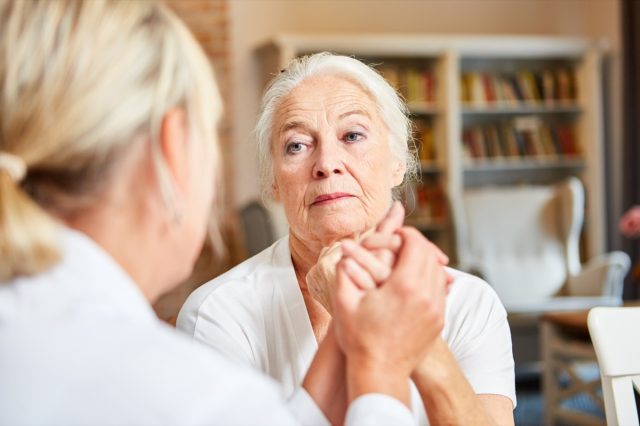
Senior woman in consultation with her female doctor or therapist
Shutterstock

Probst shares, "One of the secrets of healthy aging that people often don't think about is maintaining meaningful relationships.  Emotional support may be just as integral as diet and exercise in promoting healthy aging.  Meaningful relationships can help stave off depression that can result from spending a significant amount of time alone.  Even having a pet, such as a dog or cat, can be a source of emotional support."
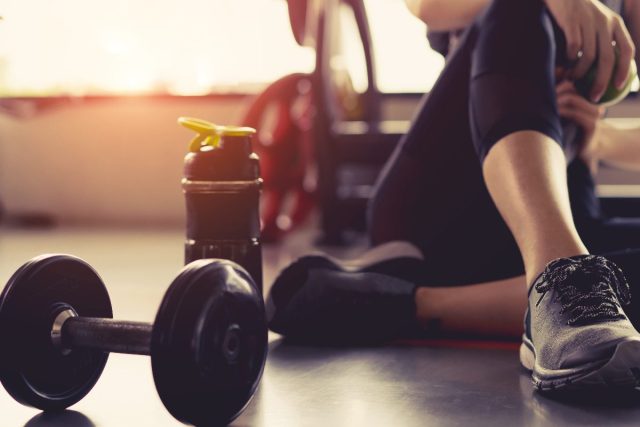
woman sitting with dumbbell at gym
Shutterstock

"Aggressive exercise, such as squats, kettlebell jumping jacks, and excessive high impact exercises" should be avoided after 55 according to Barbara Bergin, M.D Retired Board Certified Orthopedic Surgeon. "Take things in moderation as you age. We are eventually victims of our gene pool, injuries of the past and our current exercise habits. There is some information in the literature on this kind of thing, but I mostly draw from 40 years of experience, and the concept of what keeps your orthopedic surgeon busy is probably something you shouldn't be doing. Squats and high impact exercise put a lot of strain on aging knees. Meniscus tears and the progression of osteoarthritis in weight bearing joints are the result. Humans, by natural design, are hunter gatherers. That means we walk long distances at a slow pace, and lift light weights. As we age, exercise routines should incorporate this." 
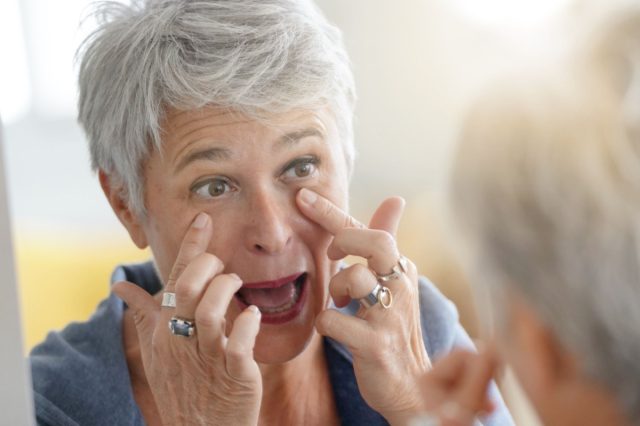
Mature white-haired woman checking eye wrinkles in front of mirror.
Shutterstock

Dr. Bergin says, "It doesn't work on 99..9% of people. When I tell my patients this, they sometimes come up with ads or articles featuring some ripped 80-year-old. This is the true definition of fake news. Anyone heard of  photoshopping? Plastic surgery? Your gene pool? These deformities of aging include: batwings, love handles, muffin-tops, decreased height, thick knees, hunch/hump back, and drooping breasts. They are due to natural, and progressive physical phenomena and in most circumstances, cannot be exercised away. Patients (mostly women) often hurt themselves trying to exercise them away. 

Decreased height and hunch/humpback are mostly due to the loss of articular cartilage between all of the joints, especially in the spine. In some cases, it is exacerbated by compression fractures of the spine, which can be prevented by maintaining bone density as we age. But the natural deformity and shortening due to loss of cartilage cannot be prevented. Other deformities are due to loss of muscle tone, but also the natural diminished integrity of collagen which occurs with aging, and cannot be stopped. Loss of muscle tone can be diminished but not stopped. Lifting light weights, and above all, trying to avoid injury while exercising, is helpful. Plastic surgeons can help too."
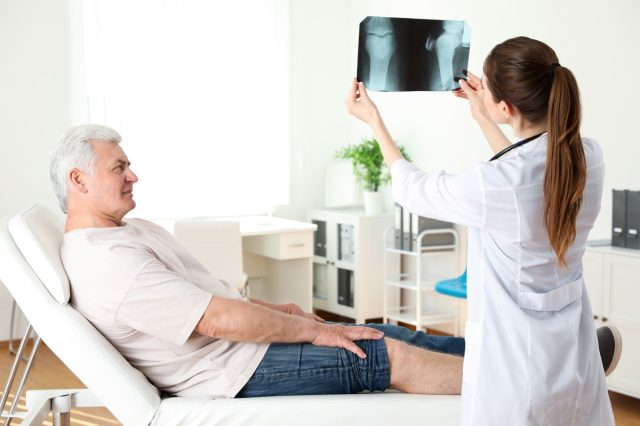
doctor with X-ray and senior patient in clinic. Knee problem
Shutterstock

Dr. Bergin tells us, "Osteoporosis occurs in everyone if we live long enough. It is painless, unless we sustain a fragility fracture (fractures due to the presence of osteoporosis). Many patients mistakenly think that osteoporosis and osteoarthritis are related, and if they have no pain, then they must not have osteoporosis. Osteoarthritis and osteoporosis are unrelated. There is no relationship between the two, other than both can be present at the same time…usually when we get older. Osteoporosis must be prevented, and once one has it, it should be treated. Exercise is only one part of the treatment of osteoporosis."

Adblock test (Why?)


Things to Never Do After Age 55 Say Experts — Eat This Not That - Eat This, Not That
Read More

You are where you eat: Eating trend makes restaurants theaters | Daily Sabah - Daily Sabah

The world shifts into a new trend: Making the eating experience "Instagrammable" and more cinematic, as new restaurants with more authentic content pop up daily.

The wonder of our present day is the contradictory trends. At the moment, catastrophic fears abound concerning war, inflation, COVID-19, the climate crisis and a general decline. But then there’s this: A return to the Roaring Twenties, a time when people are dining in style again.

You are WHAT you eat. But also WHERE you eat. Escapism is the latest trend – an escape from everyday life to a world like in some Hollywood film. A question about the spirit of the times is this: Will going out be increasingly staged for display on social networks?

"The dining experience" is being taken to some new heights – or lows, depending on your point of view. Top gastronomy publisher Marcella Prior-Callwey has helped to understand what the new event-dining megatrends are all about.

In west Berlin’s elegant Kurfuerstendamm boulevard, restaurant MQ offers California-style dining, while Berlin’s Italian restaurant Coccodrillo has a wild mixture of 1970s, Hollywood, diner and Italian-disco styles, local critics say.

It is the second trattoria in Germany by the gastronomy outfit Big Squadra, the German branch of the Big Mamma Group. Prior to Berlin, the group had created a big stir in places like Paris, London, Madrid, Marseilles and Monaco. Big Mamma’s design studio, Kiki, loves to design guest rooms of splashy-colored retro-kitsch.

"It isn’t our goal to be seen as an Instagram restaurant," Big Squadra Communications Officer Chiara Baumgartner said. “But if it is beautiful and exceptional, then pictures will be taken and people will want to share them. That’s how it is.”

Light bulbs with glowing filaments, vintage furniture

Naturally, photogenic bars and restaurants have been around for a long time – whether due to their breathtaking views, their location up in the mountains or on a waterfront, or because of their impressive space. But during the 2010s it became apparent that even if located in boring spots, cafes and bars increasingly feature hip interior designs. The gastronomical world has mutated into one global village.

And, regardless of whether it is Manhattan Island or Barcelona, the new trendy places share many interior decor features in common: lightbulbs with visibly glowing filaments, vintage furniture, walls of brick or concrete, chalkboards, hanging flower baskets, clipboard menus, or even a bicycle on the wall, for whatever reason.

"Eventgastronomy" is the newest theater attraction.

"The gastronomical world is now much farther along than just wanting to be 'Instagramamble,'" said Marcella Prior-Callwey of the publishing company Callwey-Verlag in Munich. "It’s about the live experience, for only in that way can analog offerings compete against the digital world." Her publishing house each year stages a competition seeking "the most beautiful restaurants and bars" in Germany.

"Restaurants are the new theater. They are conceived as a Gesamtkunstwerk (total work of art)," Prior-Callwey said. Entrepreneurs aim to speak to all the senses with eclectic designs, music tailored to the setting and attractive menus.

Patrons want to have the best possible time there instead of just watching others online, she said. “They say to themselves: If I am spending money and investing the time, then I want it to be something stunning.”

The new gastronomical megatrend

Prior-Callwey said that the trailblazers of the so-called megatrend now spreading across Europe and beyond have been, among others, from London. There, such exclusive brasseries as Amazonico, Sketch and The Maine Mayfair have paved the way.

In such places, there is often some unusual combination on the plate and new ideas about how meals should be presented, whether for one person or more, so-called sharing, said Prior-Callwey. “Many guests want to see and be seen in such big-city restaurants. But above all, it’s about the real moment that they want to experience.”

The noble event dining experience is just one part of peoples’ overloaded present-day lives, in which everyone – from classical cultural institutions to media to streaming services – competes for customers’ wallets and, above all, their time and attention, she explained.

”We are all inundated with offers that are clamoring for attention,” said Prior-Callwey. “And you have to offer something and fill the time as stunningly as possible – and that’s exactly what these restaurants are doing.”

Adblock test (Why?)


You are where you eat: Eating trend makes restaurants theaters | Daily Sabah - Daily Sabah
Read More

Sunday, September 11, 2022

Are Green Oysters Safe To Eat? - Mashed

Given the risk, it's hard to blame anyone for shying away from an oyster whose color looks a little off. As Wide Open Eats explains, however, the green coloration of oysters from North Carolina isn't a sign of malady in the oysters. Actually, it's a sign that the oysters have been healthy in at least one way. The green color of these oysters' gills is a result of feeding on the local algae, which is green. They add that in France, green oysters are actually more desirable than their counterparts lacking that pigment. Oyster Guide addresses the issue of safety directly, explaining that the green coloration is simply an indication of the oyster's diet. That means if nothing else, the oysters were digesting food properly during their lives.

Wide Open Eats also writes that green oysters have a creamier texture and a stronger brine taste. Atlas Obscura says restaurants within and outside of North Carolina are starting to offer them more widely due to these flavor elements.

While you may not consider green oysters the absolute best oysters in the United States, the color of their gills is no indication of whether they are safe to eat. All oysters regardless of their coloration pose a risk and according to FoodSafety.gov, the only way to ensure safety is to heat them to at least 145 degrees Fahrenheit. Going green in this way poses no greater risk than normal.

Adblock test (Why?)


Are Green Oysters Safe To Eat? - Mashed
Read More

There are many rules around ‘good’ and ‘bad’ foods, but eating is never that simple - Marin Independent Journal

We usually think of eating as simple — a biological response to how hungry or full we feel.

But eating and enjoyment is a complex process. Our upbringing, the influence of others such as family and friends, our emotions, media, education and our health status are all strong influences on how, what and when we eat. Then there is how food is cooked and prepared, our religious beliefs and values, and our access to food.

When I work with people with eating disorders, I frequently hear loved ones asking why sufferers don’t just eat like a “normal person.” They can’t understand why they struggle to eat. I try to explain eating is strongly influenced by the way we think about food, our bodies and ourselves.

Sensory sensitivity can have a strong influence on our food preferences. This can be a factor for people with autism, who might be sensitive to how foods taste, feel, look or smell.

They might be hypersensitive to sensations others wouldn’t be bothered by. For example, they may not like the way a food feels in their mouth and so develop an aversion to that type of food.

Often this is called “fussy eating” where a person won’t eat certain foods. Hypersensitivity becomes a problem if it means a person is restricted in what they will eat to the point where they may become malnourished or unhealthy as a result of their food choices. This can be annoying and concerning for families and loved ones. Specialist dietitians and psychologists may be able to work with people with aversions and sensitivities.

People who are not autistic may maintain dietary restrictions and preferences, too. Our culture and familiarity with certain foods affect our eating habits and enjoyment of food. How experimental we are with foods often depends on how varied our diet has been growing up. For example, when children are exposed to a limited variety of foods they are often less inclined to try unfamiliar foods as adolescents and adults due to a fear of the unknown.

Eating as a chore

Some people avoid eating and take a long time to eat foods. In extreme cases, this is associated with restrictive eating disorders and food aversions.

Food aversion is when a person doesn’t enjoy food or gets very little pleasure from eating. Meals may be seen as an inconvenience or chore. People may only eat highly processed foods such as takeaway or drive-through burgers. They might go long periods without eating if the limited food they like isn’t available. It’s like a phobia of eating.

If people lose a lot of body weight due to their reluctance to eat or become unhealthy generally, treatment revolves around eating by the clock and setting a routine as well as desensitisation to food, which can make it more of a chore. Eating more socially with friends and making the eating experience more pleasurable can help.

Sometimes when meal times have been associated with negative experiences such as arguing at dinner time, the pleasure of eating with family can be lost. Pairing eating with pleasurable interactions is important for healthy eating.

Fauxels/Pexels

Pairing eating with pleasurable interactions is important for healthy eating.

Food preferences can also be learnt. In eating disorders such as anorexia nervosa, people develop a lot of rules around what foods are “good” or “bad.” Usually we attach these value judgments to low calorie or “healthy” foods. Eating these foods might make a person feel more comfortable and positive about themselves. If they eat “bad” foods, typically those high in sugar and carbohydrates, they might feel guilty and negative about their body and themselves.

When these beliefs become rigid and restrictive, re-education can help people be more flexible with their eating such as being able to eat foods without guilt. I like to talk about all foods being “good” foods and focusing on their function in and for the body. For example, sugar helps give us energy, carbohydrates help us concentrate.

Food as reward

We also eat in response to our emotions. We might engage in “stress eating” to distract ourselves from a pressing problem, or eat treats to reward ourselves for doing something we don’t like.

When children are given lollipops, ice cream or something else they really like to eat and perhaps don’t have often for good behavior or an achievement, food becomes a powerful reward.

The reverse action — being deprived of food, such as dessert, for poor behavior — is also powerful.

So, the way we eat and what we eat is related to how we are feeling, who we are with, our experiences with food, our associations with particular types of foods, as well as our simple biological need for fuel and energy.

More than just a simple response to hunger, our relationship with food is a complex interplay of our emotions, our familiarity with food, our senses and our culture and upbringing.

This article is republished from The Conversation, an independent and nonprofit source of news, analysis and commentary from academic experts, under a Creative Commons license.

Adblock test (Why?)


There are many rules around ‘good’ and ‘bad’ foods, but eating is never that simple - Marin Independent Journal
Read More

Saturday, September 10, 2022

Abdominal Fat Melting Secrets That Actually Work — Eat This Not That - Eat This, Not That

We all know belly fat can be a challenge to get rid of, but many don't know how dangerous it can actually be. There's two different types of body fat: Subcutaneous fat is what you can see and pinch and visceral fat, which is hidden deep within our abdomen. It wraps around our vital organs, which can lead to serious health issues like some cancers, stroke, type 2 diabetes and more. Melting away visceral fat is important for our health and overall well-being, and Eat This, Not That! Health spoke with experts who explain how to shed excess belly fat. Read on—and to ensure your health and the health of others, don't miss these Sure Signs You've Already Had COVID.

Body fat analysis with electronic bioelectrical impedance scale at weight loss clinic.
Shutterstock

Rajesh Chotalia, a Health and Wellness Consultant, Independent Pharmacist and founder of Simple Healthy Living says, "You can have a higher BMI and can have low visceral fat which is healthy, and you can have a  lower BMI but high visceral fat, and that is very risky. This is sometimes called 'skinny fat.' ('Skinny' from the outside but 'fat' on the inside). Why is this so dangerous? Because this fat is putting pressure on your internal vital organs like your Kidney, Heart, Stomach, and Intestines, and in doing so, it creates a burden on your vital organs. For a man, a healthy waistline is around 35.5 and for a woman, it is 31.5. Your risk of health goes up when your waist is bigger. For example,  for a man to go up to a 43-inch waist, your morality jumps to 50% when compared to a 35-inch waist. Women suffer 80% percent greater mortality risk at 37.5 Inches compared to 27.5 Inches. Simply put, the belly fat around your waistline is the Visceral fat and is the most dangerous one."

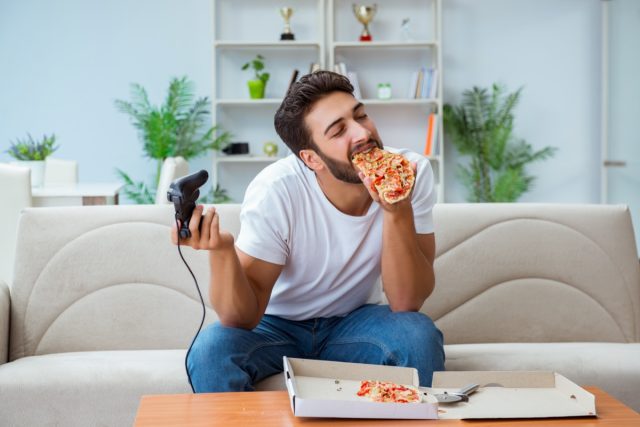
Man eating pizza having a takeaway at home relaxing resting
Shutterstock

Chotalia states, "These are the categories of food that are responsible for visceral fat: Trans fats, which are found in meats and dairy as well as in deep-fried or processed foods. Also bad are sodas, candy, processed baked goods, and other foods sweetened with fructose."

mature couple jogging outdoors
Shutterstock

"Do aerobic exercise where you are able to breathe and do exercises like normal walking or brisk walking for 30 minutes a day," reveals Chotalia. "I suggest taking a 'digestive walk' after lunch and dinner for 15 to 20 minutes. If you start going after every meal, it will help you keep up with this routine. It's also important to maintain and build your muscles. Workout with weights, do resistance training like push-ups and sit-ups, or practice yoga."

eat fiber foods
Shutterstock

Chotalia explains, "Look at everything that is going inside you from morning until you go to bed. Write it down and take a look at it. Make sure the food you are eating is water-rich, fiber-rich, and contains macro and micronutrients like vitamins and minerals, and is calorie balanced. Your goal is to eat 70% of foods that fit in here. Just because they are liquids doesn't mean that coffee, tea, and soda are considered water-rich. In fact,  they are very unhealthy for your health and dehydrate you. They are also acidic to your body.Foods that fit this category are vegetables, fruits, legumes and beans, and some nuts. I call this Whole food Plant Based (WFPB) diet. Eat lots of salad without oil and fat-drenched dressing. Use avocado, grounded flax and chia seed as a good source of fat. Use sprouts like broccoli sprouts, alfalfa,  Fenugreek sprouts, mung bean sprouts etc. These are nutritionally rich and calories poor."

stressed out woman
Shutterstock

Chotalia states, "We know we have to eat healthily and exercise–and still we are not able to do it. Have you thought about why? Let us think about it: Due to busy work and stressful events happening in our life we have not planned our food, so when we are stressed, tired and hungry, we pick up the food that shows up and as we have not planned. Then we pick up what's convenient- and that's usually fast food loaded with all the bad things like Fat, Sugar, Oil, that's also processed and loaded with chemicals and preservatives. When you are purpose-driven and you have taken the time out to plan the food for the entire week and get the groceries accordingly, you are well equipped so you have food ready when you need it and do not pick up bad food. Stress Management like meditation, writing a gratitude journal and going to sleep before 10 PM and waking up at 6:00AM gives your body a healing rest. You are less reactive and tired when you are ready to start your day. You can get a coach or professional help if you need it in this area. Make it a Must and you will see the positive results."

Heather Newgen

Heather Newgen has two decades of experience reporting and writing about health, fitness, entertainment and travel. Heather currently freelances for several publications. Read more about Heather

Adblock test (Why?)


Abdominal Fat Melting Secrets That Actually Work — Eat This Not That - Eat This, Not That
Read More

6 Foods That Heal Your Body — Eat This Not That - Eat This, Not That

Even if laughter is, as they say, the best medicine, when you have diabetes, the long-prescribed drug metformin may be a far better choice for lowering your blood sugar.

But pharmaceuticals are not the only choice when it comes to improving your health and decreasing your risk of disease. Healthy food is another, much tastier option with far-reaching medicinal powers. Foods have amazing potential to remedy all sorts of symptoms, illnesses, and diseases.

We've known this ever since Hippocrates famously wrote, "Let food be thy medicine, thy medicine shall be thy food." Good food choices are good investments.

So, follow your doctor's advice, but know that there are many foods you can choose to help heal what ails you. Here are some "good investments"—the low-hanging fruit of foods that heal common afflictions.

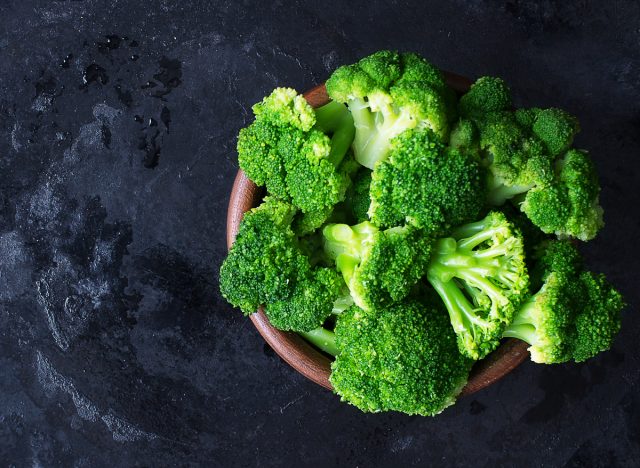
broccoli
Shutterstock

One of the best things you can do daily to improve your health and reduce risk of disease is to eat green vegetables like broccoli.

Broccoli is so rich in bioactive compounds that researchers have been known to call it "Green Chemoprevention." Results from epidemiological studies and experiments have suggested that a compound called sulforaphane that in abundance in cruciferous vegetables like broccoli and cauliflower, kale and cabbage, works on a genetic level to "switch off" cancer genes, leading to the targeted death of cancer cells.

Studies show that eating raw or lightly steamed broccoli a few times a week can lower rates of prostate, breast, lung, and skin cancers. (Heavy steaming or boiling of broccoli leaches out the beneficial compound.) In addition, research published in 2019 in Nutrition & Cancer suggests that eating raw cruciferous vegetables like broccoli is associated with lower odds of stomach cancer.

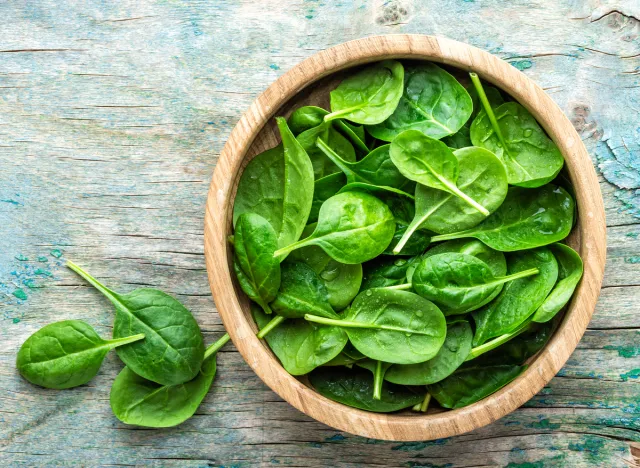
fresh baby spinach
Shutterstock

Spinach is a potent source of lutein and zeaxanthin, two carotenoids that an analysis of studies in the Journal of the National Cancer Institute suggests may significantly reduce the rate of breast cancer when consumed in abundance. This salad green is also rich in DNA-strengthening folate, a B vitamin essential during pregnancy. A study published in the PLoS One journal linked low levels of folate to an increased breast cancer risk.

RELATED: Secret Side Effects of Eating Spinach, Says Science

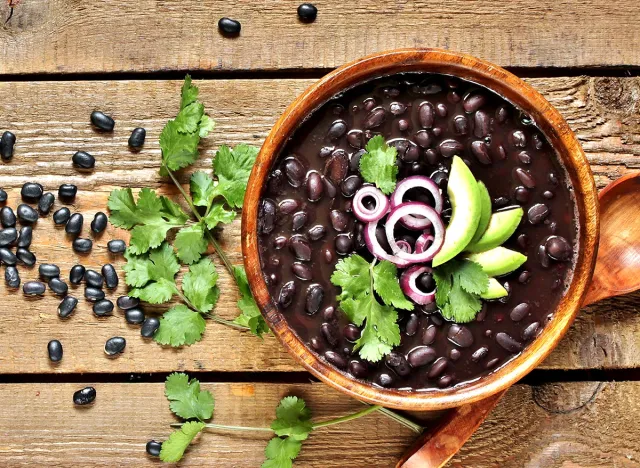
black beans
Shutterstock

Unlike animal sources of protein, beans are free of unhealthy fats. That might be the reason one large epidemiological study in JAMA Internal Medicine found that people who consumed legumes at least four times a week had a 22 percent lower risk of heart disease compared with those who consumed them less than once a week. Likewise, a 2019 meta-analysis in Advances in Nutrition showed that eating beans, lentils, peas and other legumes regularly reduces the risk for cardiovascular disease, coronary heart disease, and high blood pressure.

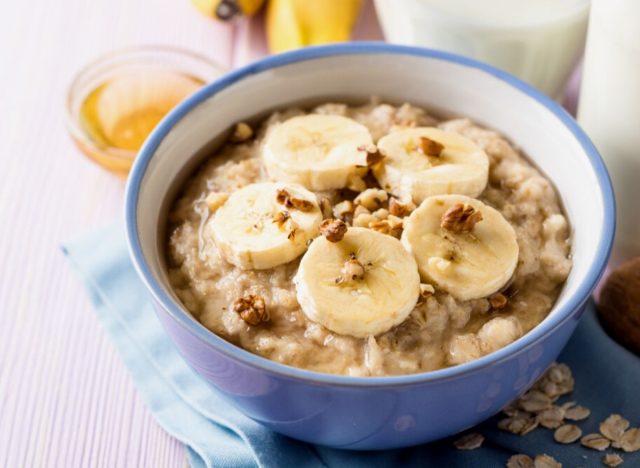
Slow Cooker Banana and Coconut Milk Oatmeal
Shutterstock

Eating oatmeal regularly can help prevent type 2 diabetes and may even reverse it due to its effect on blood sugar control. Oats contain a type of soluble fiber called beta-glucan, which seems to support metabolic health.

In a 2021 Journal of Functional Foods study, researchers found that when a group of people with type 2 diabetes given a 5-gram supplement of oat beta-glucan once a day improved their blood sugar control, reduced their appetite, and felt satisfied for longer after 12 weeks. They also experienced enhanced health of their intestinal microbiota, which plays a keen role in metabolic health.

One possible way beta-glucan helps regulate blood sugar is by forming a gel in the gut, which delays the release of glucose into the bloodstream, say the researchers. Another powerful role beta-glucans play in health is by lowering LDL, the so-called bad cholesterol.

RELATED: 5 Best Oatmeal Habits if You Have Diabetes, Say Dietitians

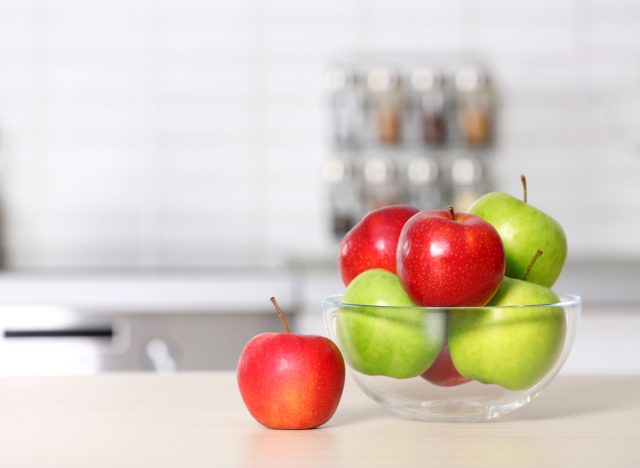
bowl of apples
Shutterstock

For the 65 million Americans with high blood pressure, putting down the saltshaker is not enough to avoid the leading hypertension dangers—stroke and heart attack. Changing eating habits, however, can make a big difference. There is no single magic-bullet food that'll bring your blood pressure down to a healthy level. Look into the DASH Diet (Dietary Approaches to Stop Hypertension) for a comprehensive reboot of your eating habits. Meanwhile, grab an apple. Apples are part of the DASH plan and are particularly beneficial for cardiovascular health, keeping blood vessels pliable, and reducing blood pressure, according to a 2020 paper in Critical Reviews in Foods Science and Nutrition. In addition to the 4.5 grams of blood pressure-lowering fiber you get from each apple, you'll enjoy a healthy helping of quercetin, which American Heart Association studies have shown is an effective anti-hypertensive.

RELATED: 3 Ways Heat Will Affect Apple Picking Season This Fall, Warn Farmers

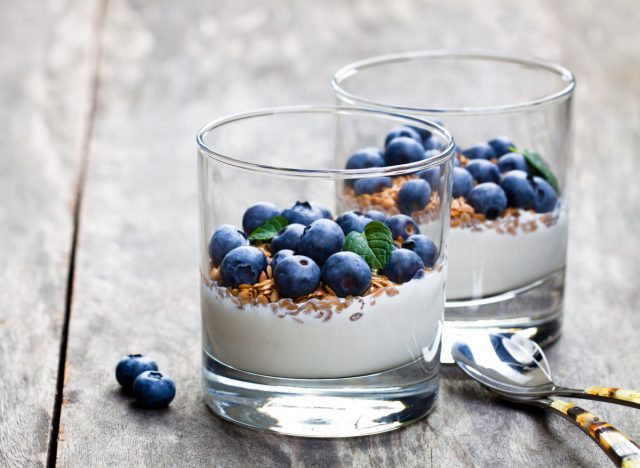
yogurt with blueberries and flax seeds
Shutterstock

Blueberries are nature's potent little blue "pills" that can neutralize the inflammatory effects of your lifestyle. These berries contain a class of antioxidants called flavonoids and anthocyanins that can turn off inflammatory and immune genes.

A review of research on blueberries and their anthocyanins in a 2020 edition of Advances in Nutrition demonstrated that the delicious fruit is associated with anti-inflammatory action and beneficial effects on vascular health, regulating blood sugar, and improvements in gut flora balance. Chronic, low-grade inflammation is an immune system reaction often triggered by poor lifestyle habits that contributes to many disorders and diseases, including arthritis, type 2 diabetes, cancer, heart disease, and dementia.

Jeff Csatari

Jeff Csatari, a contributing writer for Eat This, Not That!, is responsible for editing Galvanized Media books and magazines and for advising journalism students through the Zinczenko New Media Center at Moravian University in Bethlehem, PA. Read more about Jeff

Adblock test (Why?)


6 Foods That Heal Your Body — Eat This Not That - Eat This, Not That
Read More

Anushka Sharma Reveals She Eats Dinner By 6PM With Husband Virat Kohli - NDTV Food

The lives of our favourite celebrities are a source of much curiosity and intrigue among us. We often wonder how these stars stay in such ...