Rechercher dans ce blog

Tuesday, November 29, 2022

How to improve E-A-T for websites and entities - Search Engine Land

The concept of expertise, authoritativeness and trustworthiness (E-A-T) has played a central role in ranking keywords and websites – and not just in recent years. 

Speaking at SMX Next, Hyung-Jin Kim, VP of Search at Google, announced that Google has been implementing E-A-T principles for ranking for more than 10 years.

Why is E-A-T so important?

In his SMX 2022 keynote, Kim noted:

“E-A-T is a template for how we rate an individual site. We do it to every single query and every single result. It’s pervasive throughout every single thing we do.”

From this statement, it is clear that E-A-T is important not just for YMYL pages but for all topics and keywords. Today, E-A-T seemingly impacts many different areas in Google’s ranking algorithms.

For several years, Google has been under much pressure about misinformation in search results. This is underscored in the white paper “How Google fights disinformation,” presented in February 2019 at the Munich Security Conference. 

Google wants to optimize its search system to provide great content for the respective search queries depending on the user’s context and consider the most reliable sources. The quality raters play a special role here.

“A key part of our evaluation process is getting feedback from everyday users about whether our ranking systems and proposed improvements are working well. But what do we mean by “working well”? We publish publicly available rater guidelines that describe in great detail how our systems intend to surface great content.” 

Evaluation according to E-A-T criteria is crucial for quality raters.

“They evaluate whether those pages meet the information needs based on their understanding of what that query was seeking, and they consider things like how authoritative and trustworthy that source seems to be on the topic in the query. To evaluate things like expertise, authoritativeness, and trustworthiness—sometimes referred to as “E-A-T”—raters are asked to do reputational research on the sources.” 

A distinction must be made between the document’s relevance and the source’s quality. The ranking magic at Google takes place in two areas. 

This becomes clear when you take a look at the statements made by various Google spokespersons about a quality score at the document and domain level.

In his SMX West 2016 presentation titled How Google Works: A Google Ranking Engineer’s Story, Paul Haahr shared the following:

“Another problem we were having was an issue with quality and this was particularly bad. We think of it as around 2008, 2009 to 2011. We were getting lots of complaints about low-quality content and they were right.

We were seeing the same low-quality thing but our relevance metrics kept going up and that’s because the low-quality pages can be very relevant.

This is basically the definition of a content form in our vision of the world so we thought we were doing great.

Our numbers were saying we were doing great and we were delivering a terrible user experience and turned out we weren’t measuring what we needed to. So what we ended up doing was defining an explicit quality metric which got directly at the issue of quality. It’s not the same as relevance…

And it enabled us to develop quality related signals separate from relevant signals and really improve them independently. So when the metrics missed something, what ranking engineers need to do is fix the rating guidelines… or develop new metrics.”

(This quote is from the part of the talk on the quality rater guidelines and E-A-T.)

Haahr also mentioned that:

  • Trustworthiness is the most important part of E-A-T. 
  • The criteria mentioned in the quality rater guidelines for bad and good content and websites, in general, are the benchmark pattern for how the ranking system should work.

In 2016, John Mueller stated the following in a Google Webmaster Hangout:

“For the most part, we do try to understand the content and the context of the pages individually to show them properly in search. There are some things where we do look at a website overall though.

So for example, if you add a new page to a website and we’ve never seen that page before, we don’t know what the content and context is there, then understanding what kind of a website this is helps us to better understand where we should kind of start with this new page in search.

So that’s something where there’s a bit of both when it comes to ranking. It’s the pages individually, but also the site overall.

I think there is probably a misunderstanding that there’s this one site-wide number that Google keeps for all websites and that’s not the case. We look at lots of different factors and there’s not just this one site-wide quality score that we look at.

So we try to look at a variety of different signals that come together, some of them are per page, some of them are more per site, but it’s not the case where there’s one number and it comes from these five pages on your website.”

Here, Mueller emphasizes that in addition to the classic relevance ratings, there are also rating criteria that relate to the thematic context of the entire website. 

This means that there are signals Google takes into account to classify and evaluate the entire website thematically. The proximity to the E-A-T rating is obvious.

Various passages on E-A-T and the quality rater guidelines can be found in the Google white paper previously mentioned:

“We continue to improve on Search every day. In 2017 alone, Google conducted more than 200,000 experiments that resulted in about 2,400 changes to Search. Each of those changes is tested to make sure it aligns with our publicly available Search Quality Rater Guidelines, which define the goals of our ranking systems and guide the external evaluators who provide ongoing assessments of our algorithms.”

“The systems do not make subjective determinations about the truthfulness of webpages, but rather focus on measurable signals that correlate with how users and other websites value the expertise, trustworthiness, or authoritativeness of a webpage on the topics it covers.”

“Ranking algorithms are an important tool in our fight against disinformation. Ranking elevates the relevant information that our algorithms determine is the most authoritative and trustworthy above information that may be less reliable. These assessments may vary for each webpage on a website and are directly related to our users’ searches. For instance, a national news outlet’s articles might be deemed authoritative in response to searches relating to current events, but less reliable for searches related to gardening.”

“Our ranking system does not identify the intent or factual accuracy of any given piece of content. However, it is specifically designed to identify sites with high indicia of expertise, authority, and trustworthiness.”

“For these “YMYL” pages, we assume that users expect us to operate with our strictest standards of trustworthiness and safety. As such, where our algorithms detect that a user’s query relates to a “YMYL” topic, we will give more weight in our ranking systems to factors like our understanding of the authoritativeness, expertise, or trustworthiness of the pages we present in response.”

The following statement is particularly interesting as it becomes clear how powerful E-A-T can be in certain contexts and concerning events compared to classic relevance factors.

“To reduce the visibility of this type of content, we have designed our systems to prefer authority over factors like recency or exact word matches while a crisis is developing.”

The effects of E-A-T could be seen in various Google core updates in recent years.

E-A-T influences rankings – but it is not a ranking factor

Plenty of discussions in recent years centered on whether E-A-T influences rankings and, if so, how.  Almost all SEOs agree it is a concept or a kind of layer that supplements the relevance scoring. 

Google confirms that E-A-T is not a ranking factor. There is also no E-A-T score. 

E-A-T comprises various signals or criteria and serves as a blueprint for how Google’s ranking algorithms should determine expertise, authority and trust (i.e., quality).

However, Google also speaks of a rating applied algorithmically to every search query and result. In other words, there must be signals or data that can be used as a basis for an assessment.

Google uses the manual ratings of the search evaluators as training data for the self-learning ranking algorithms (keyword: supervised machine learning) to identify patterns for high-quality content and sources. 

This brings Google closer to the E-A-T evaluation criteria in the quality rater guidelines.

If the content and sources rated as high or poor by the search evaluators repeatedly show the same specific pattern and the frequency of these pattern properties reaches a threshold value, Google could also take these criteria/signals into account for the ranking in the future.

In my opinion, E-A-T is made up of different origins:

  • Entity-based rating.
  • Coati (ex-Panda) based rating.
  • Link-based rating.

To rate sources such as domains, publishers or authors, Google accesses an entity-based index such as the Knowledge Graph or Knowledge Vault. Entities can be brought into a thematic context, and the entities’ connection can be recorded.

To evaluate the content quality related to individual documents and the entire domain, Google can fall back on tried and tested algorithms from Panda or Coati today.

PageRank is the only signal for E-A-T officially confirmed by Google. Google has been using links to assess trust and authority for over 20 years.

Possible E-A-T origins

Based on Google patents and official statements, I have summarized concrete signals for an algorithmic E-A-T evaluation in this infographic.

Possible factors for an E-A-T evaluation

SEOs must differentiate these possible signals to positively influence E-A-T.

On-page

Signals that come from your own website. This is about the content as a whole and in detail.

Off-page

Signals coming from external sources. This can be external content, videos, audio or search queries that can be crawled by Google. 

Links and co-occurrences from the name of the company, the publisher, the author or the domain in connection with thematically relevant terms are particularly important here. 

The more frequently these co-occurrences appear, the more likely the main entities have something to do with the topic and the associated keyword cluster. 

These co-occurrences must be identifiable or crawlable by Google. Only then can you be recognized by Google and included in the E-A-T concept. In addition to co-occurrences in online texts, co-occurrences in search queries are also a source for Google.

Sentiment

Google uses natural language processing to analyze the mood around people, products and company entities. 

Reviews from Google, Yelp or other platforms can be used here with the option of leaving a rating. 

Google patents deal with this, such as “Sentiment detection as a ranking signal for reviewable entities.”

Through these findings, SEOse can derive concrete measures for positively influencing E-A-T signals.

Get the daily newsletter search marketers rely on.

15 ways to improve your E-A-T

With E-A-T, Google is ultimately trying to adapt "thematic brand positioning" that marketers have used for centuries to establish brands in combination with messages in people's minds. 

The more often a person perceives a person and/or a provider in a certain thematic context, the more trust they will give to the product, the service provider, and the medium.

In addition, authority increases if this entity is:

  • Mentioned more frequently in thematic contexts than other market participants.
  • Positively referenced by other credible and authoritarian sources. 

Through these repetitions, a neural network in the brain is retrained. We are perceived as a brand with thematic authority and trustworthiness.

As a result, Google's neural network also learns who is an authority and, thus, trustworthy for one or more topics. This applies in particular to co-occurrences in the awareness, consideration and preference phases.

The further you position yourself in the customer journey for topics, the broader the keyword cluster Google associates with. If this link is drawn, you belong to the relevant set with your own content.

These co-occurrences can be generated, for example, through:

  • Appropriate on-page content.
  • Appropriate internal linking.
  • Appropriate off-page content.
  • External/incoming links, anchor texts and the environment of the link influencing search patterns.

You have a lot of creative leeways, especially with off-page signals. But there are also no typical SEO measures that cause co-occurrence here.

As a result, those responsible for SEO are increasingly becoming the interface between technology, editing, marketing and PR.
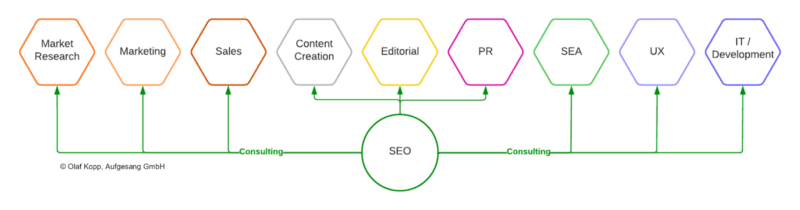
Below is a summary of possible concrete measures to optimize E-A-T.

1. Create sufficient topic-relevant content on your own website 

Building semantic topic worlds within your website shows Google that you have in-depth knowledge and expertise on a topic. 

2. Link semantically-appropriate content with the main content 

When building up semantic topic worlds, the individual content should be meaningfully linked to one another. 

A possible user journey should also be taken into account. What interests the consumer next or additionally? 

Outgoing links are useful if they show the user and Google that you are referring to other authoritative sources.

3. Collaborate with recognized experts as authors, reviewers, co-authors and influencers

"Recognized" means that they are already recognized online as experts by Google through:

  • Online publications.
  • Amazon author profiles.
  • Their own blogs and websites.
  • Social media profiles.
  • Profiles on university websites.
  • And more.

It is important that the authors show references that can be crawled by Google in the respective thematic context. This is particularly recommended for YMYL topics. 

Authors who themselves have long published web-findable content on the topic are preferable, as they are most likely known as an entity in the topical ontology.

4. Expand your share of content on a topic

The more content a company or author publishes on a topic, the greater its share of the document corpus relevant to the topic. 

This increases the thematic authority on the topic. Whether this content is published on your website or in other media doesn't matter. What’s important is that they can be recorded by Google. 

For instance, the proportion of your own topic-relevant content can be expanded beyond your website through guest articles in other relevant authority media. The more authoritative they are, the better.

Other ways to increase your share of content include:

  • Creating thematically appropriate guest posts and linking this content with your own website and social media profiles.
  • Arranging interviews on relevant topics.
  • Giving lectures at specialist events.
  • Participating in webinars as a speaker.

5. Write text in simple terms

Google uses natural language processing to understand content and mine data on entities. 

Simple sentence structures are easier for Google to capture than complex sentences. You should also call entities by name and only use personal pronouns to a limited extent. Content should be created with logical paragraphs and subheadings in mind for readability. 

6. Use TF-IDF analyses for content creation

Tools for TF-IDF analysis can be used to identify semantically related sub-entities that should appear in content on a topic. Using such terms demonstrates expertise.

7. Avoid superficial and thin content

The presence of a lot of thin or superficial content on a domain might cause Google to devalue your website in terms of quality. Delete or consolidate thin or superficial content instead.

8. Fill the knowledge gap

Most content you see online is a curation or copy of existing information that is already mentioned in hundreds or thousands of other pieces of content. 

True expertise is achieved by adding new perspectives and aspects to a topic.

9. Adhere to a consensus 

In a scientific paper, Google describes knowledge-based trust as how content sources are evaluated based on the consensus of information with popular opinion. 

This can be crucial, especially for YMYL topics (i.e., medical topics), to rank your content on the first search results.

Information and statements should be backed up with facts and supported with appropriate links to authoritative sources.

This is especially important for YMYL topics.

11. Be transparent about authors, publishers and their other content and commitments

Author boxes are not a direct ranking signal for Google, but they can help to find out more about a previously unknown author entity. 

An imprint and an “About us” page are also advantages. Also, include links to:

  • Commitments.
  • Content.
  • Profiles as authors, speakers, and association memberships.
  • Social media profiles.

Entity names are advantageous as link texts to your representations. Structured data, such as schema markup, is also recommended.

12. Avoid too many advertising banners and recommendation ads 

Aggressive advertising (i.e., Outbrain or Taboola ads) that influences website use can lead to a lower trust score.

13. Create co-occurrences outside of your own website through marketing and communication

With E-A-T, it is vital to position yourself as a brand thematically by:

  • Linking to subject-related specialist publications from your website so that Google can assign them more quickly and easily.
  • Building links from thematically relevant environments.
  • Offline advertising to influence search patterns on Google or create suitable co-occurrences in search queries (TV advertising, flyers, advertisements). Note that this is not pure image advertising but rather advertising that contributes to positioning in a subject area.
  • Co-operating with suppliers or partners to ensure suitable co-occurrences.
  • Creating PR campaigns for suitable co-occurrences. (No pure image PR.)
  • Generating buzz in social networks around your own entity.

14. Optimize user signals on your own website 

Analyze search intent for each main keyword. The content’s purpose should always match the search intent.

15. Generate great reviews

People tend to report negative experiences with companies in public.

This can also be a problem for E-A-T, as it can lead to negative sentiment around the company. That's why you should encourage satisfied customers to share their positive experiences.

Opinions expressed in this article are those of the guest author and not necessarily Search Engine Land. Staff authors are listed here.

Related Stories

New on Search Engine Land

About The Author

Olaf Kopp
Olaf Kopp is an online marketing professional with over 15 years of experience in Google Ads, SEO and content marketing. He is the co-founder, chief business development officer and head of SEO at the German online marketing agency Aufgesang GmbH. Olaf Kopp is an author, podcaster and internationally recognized industry expert for semantic SEO, E-A-T, content marketing strategies, customer journey management and digital brand building. He is co-organizer of the PPC-Event SEAcamp and host of the podcasts OM Cafe and Content-Kompass (German language).

Adblock test (Why?)


How to improve E-A-T for websites and entities - Search Engine Land
Read More

How to improve E-A-T for websites and entities - Search Engine Land

The concept of expertise, authoritativeness and trustworthiness (E-A-T) has played a central role in ranking keywords and websites – and not just in recent years. 

Speaking at SMX Next, Hyung-Jin Kim, VP of Search at Google, announced that Google has been implementing E-A-T principles for ranking for more than 10 years.

Why is E-A-T so important?

In his SMX 2022 keynote, Kim noted:

“E-A-T is a template for how we rate an individual site. We do it to every single query and every single result. It’s pervasive throughout every single thing we do.”

From this statement, it is clear that E-A-T is important not just for YMYL pages but for all topics and keywords. Today, E-A-T seemingly impacts many different areas in Google’s ranking algorithms.

For several years, Google has been under much pressure about misinformation in search results. This is underscored in the white paper “How Google fights disinformation,” presented in February 2019 at the Munich Security Conference. 

Google wants to optimize its search system to provide great content for the respective search queries depending on the user’s context and consider the most reliable sources. The quality raters play a special role here.

“A key part of our evaluation process is getting feedback from everyday users about whether our ranking systems and proposed improvements are working well. But what do we mean by “working well”? We publish publicly available rater guidelines that describe in great detail how our systems intend to surface great content.” 

Evaluation according to E-A-T criteria is crucial for quality raters.

“They evaluate whether those pages meet the information needs based on their understanding of what that query was seeking, and they consider things like how authoritative and trustworthy that source seems to be on the topic in the query. To evaluate things like expertise, authoritativeness, and trustworthiness—sometimes referred to as “E-A-T”—raters are asked to do reputational research on the sources.” 

A distinction must be made between the document’s relevance and the source’s quality. The ranking magic at Google takes place in two areas. 

This becomes clear when you take a look at the statements made by various Google spokespersons about a quality score at the document and domain level.

In his SMX West 2016 presentation titled How Google Works: A Google Ranking Engineer’s Story, Paul Haahr shared the following:

“Another problem we were having was an issue with quality and this was particularly bad. We think of it as around 2008, 2009 to 2011. We were getting lots of complaints about low-quality content and they were right.

We were seeing the same low-quality thing but our relevance metrics kept going up and that’s because the low-quality pages can be very relevant.

This is basically the definition of a content form in our vision of the world so we thought we were doing great.

Our numbers were saying we were doing great and we were delivering a terrible user experience and turned out we weren’t measuring what we needed to. So what we ended up doing was defining an explicit quality metric which got directly at the issue of quality. It’s not the same as relevance…

And it enabled us to develop quality related signals separate from relevant signals and really improve them independently. So when the metrics missed something, what ranking engineers need to do is fix the rating guidelines… or develop new metrics.”

(This quote is from the part of the talk on the quality rater guidelines and E-A-T.)

Haahr also mentioned that:

  • Trustworthiness is the most important part of E-A-T. 
  • The criteria mentioned in the quality rater guidelines for bad and good content and websites, in general, are the benchmark pattern for how the ranking system should work.

In 2016, John Mueller stated the following in a Google Webmaster Hangout:

“For the most part, we do try to understand the content and the context of the pages individually to show them properly in search. There are some things where we do look at a website overall though.

So for example, if you add a new page to a website and we’ve never seen that page before, we don’t know what the content and context is there, then understanding what kind of a website this is helps us to better understand where we should kind of start with this new page in search.

So that’s something where there’s a bit of both when it comes to ranking. It’s the pages individually, but also the site overall.

I think there is probably a misunderstanding that there’s this one site-wide number that Google keeps for all websites and that’s not the case. We look at lots of different factors and there’s not just this one site-wide quality score that we look at.

So we try to look at a variety of different signals that come together, some of them are per page, some of them are more per site, but it’s not the case where there’s one number and it comes from these five pages on your website.”

Here, Mueller emphasizes that in addition to the classic relevance ratings, there are also rating criteria that relate to the thematic context of the entire website. 

This means that there are signals Google takes into account to classify and evaluate the entire website thematically. The proximity to the E-A-T rating is obvious.

Various passages on E-A-T and the quality rater guidelines can be found in the Google white paper previously mentioned:

“We continue to improve on Search every day. In 2017 alone, Google conducted more than 200,000 experiments that resulted in about 2,400 changes to Search. Each of those changes is tested to make sure it aligns with our publicly available Search Quality Rater Guidelines, which define the goals of our ranking systems and guide the external evaluators who provide ongoing assessments of our algorithms.”

“The systems do not make subjective determinations about the truthfulness of webpages, but rather focus on measurable signals that correlate with how users and other websites value the expertise, trustworthiness, or authoritativeness of a webpage on the topics it covers.”

“Ranking algorithms are an important tool in our fight against disinformation. Ranking elevates the relevant information that our algorithms determine is the most authoritative and trustworthy above information that may be less reliable. These assessments may vary for each webpage on a website and are directly related to our users’ searches. For instance, a national news outlet’s articles might be deemed authoritative in response to searches relating to current events, but less reliable for searches related to gardening.”

“Our ranking system does not identify the intent or factual accuracy of any given piece of content. However, it is specifically designed to identify sites with high indicia of expertise, authority, and trustworthiness.”

“For these “YMYL” pages, we assume that users expect us to operate with our strictest standards of trustworthiness and safety. As such, where our algorithms detect that a user’s query relates to a “YMYL” topic, we will give more weight in our ranking systems to factors like our understanding of the authoritativeness, expertise, or trustworthiness of the pages we present in response.”

The following statement is particularly interesting as it becomes clear how powerful E-A-T can be in certain contexts and concerning events compared to classic relevance factors.

“To reduce the visibility of this type of content, we have designed our systems to prefer authority over factors like recency or exact word matches while a crisis is developing.”

The effects of E-A-T could be seen in various Google core updates in recent years.

E-A-T influences rankings – but it is not a ranking factor

Plenty of discussions in recent years centered on whether E-A-T influences rankings and, if so, how.  Almost all SEOs agree it is a concept or a kind of layer that supplements the relevance scoring. 

Google confirms that E-A-T is not a ranking factor. There is also no E-A-T score. 

E-A-T comprises various signals or criteria and serves as a blueprint for how Google’s ranking algorithms should determine expertise, authority and trust (i.e., quality).

However, Google also speaks of a rating applied algorithmically to every search query and result. In other words, there must be signals or data that can be used as a basis for an assessment.

Google uses the manual ratings of the search evaluators as training data for the self-learning ranking algorithms (keyword: supervised machine learning) to identify patterns for high-quality content and sources. 

This brings Google closer to the E-A-T evaluation criteria in the quality rater guidelines.

If the content and sources rated as high or poor by the search evaluators repeatedly show the same specific pattern and the frequency of these pattern properties reaches a threshold value, Google could also take these criteria/signals into account for the ranking in the future.

In my opinion, E-A-T is made up of different origins:

  • Entity-based rating.
  • Coati (ex-Panda) based rating.
  • Link-based rating.

To rate sources such as domains, publishers or authors, Google accesses an entity-based index such as the Knowledge Graph or Knowledge Vault. Entities can be brought into a thematic context, and the entities’ connection can be recorded.

To evaluate the content quality related to individual documents and the entire domain, Google can fall back on tried and tested algorithms from Panda or Coati today.

PageRank is the only signal for E-A-T officially confirmed by Google. Google has been using links to assess trust and authority for over 20 years.

Possible E-A-T origins

Based on Google patents and official statements, I have summarized concrete signals for an algorithmic E-A-T evaluation in this infographic.

Possible factors for an E-A-T evaluation

SEOs must differentiate these possible signals to positively influence E-A-T.

On-page

Signals that come from your own website. This is about the content as a whole and in detail.

Off-page

Signals coming from external sources. This can be external content, videos, audio or search queries that can be crawled by Google. 

Links and co-occurrences from the name of the company, the publisher, the author or the domain in connection with thematically relevant terms are particularly important here. 

The more frequently these co-occurrences appear, the more likely the main entities have something to do with the topic and the associated keyword cluster. 

These co-occurrences must be identifiable or crawlable by Google. Only then can you be recognized by Google and included in the E-A-T concept. In addition to co-occurrences in online texts, co-occurrences in search queries are also a source for Google.

Sentiment

Google uses natural language processing to analyze the mood around people, products and company entities. 

Reviews from Google, Yelp or other platforms can be used here with the option of leaving a rating. 

Google patents deal with this, such as “Sentiment detection as a ranking signal for reviewable entities.”

Through these findings, SEOse can derive concrete measures for positively influencing E-A-T signals.

Get the daily newsletter search marketers rely on.

15 ways to improve your E-A-T

With E-A-T, Google is ultimately trying to adapt "thematic brand positioning" that marketers have used for centuries to establish brands in combination with messages in people's minds. 

The more often a person perceives a person and/or a provider in a certain thematic context, the more trust they will give to the product, the service provider, and the medium.

In addition, authority increases if this entity is:

  • Mentioned more frequently in thematic contexts than other market participants.
  • Positively referenced by other credible and authoritarian sources. 

Through these repetitions, a neural network in the brain is retrained. We are perceived as a brand with thematic authority and trustworthiness.

As a result, Google's neural network also learns who is an authority and, thus, trustworthy for one or more topics. This applies in particular to co-occurrences in the awareness, consideration and preference phases.

The further you position yourself in the customer journey for topics, the broader the keyword cluster Google associates with. If this link is drawn, you belong to the relevant set with your own content.

These co-occurrences can be generated, for example, through:

  • Appropriate on-page content.
  • Appropriate internal linking.
  • Appropriate off-page content.
  • External/incoming links, anchor texts and the environment of the link influencing search patterns.

You have a lot of creative leeways, especially with off-page signals. But there are also no typical SEO measures that cause co-occurrence here.

As a result, those responsible for SEO are increasingly becoming the interface between technology, editing, marketing and PR.

Below is a summary of possible concrete measures to optimize E-A-T.

1. Create sufficient topic-relevant content on your own website 

Building semantic topic worlds within your website shows Google that you have in-depth knowledge and expertise on a topic. 

2. Link semantically-appropriate content with the main content 

When building up semantic topic worlds, the individual content should be meaningfully linked to one another. 

A possible user journey should also be taken into account. What interests the consumer next or additionally? 

Outgoing links are useful if they show the user and Google that you are referring to other authoritative sources.

3. Collaborate with recognized experts as authors, reviewers, co-authors and influencers

"Recognized" means that they are already recognized online as experts by Google through:

  • Online publications.
  • Amazon author profiles.
  • Their own blogs and websites.
  • Social media profiles.
  • Profiles on university websites.
  • And more.

It is important that the authors show references that can be crawled by Google in the respective thematic context. This is particularly recommended for YMYL topics. 

Authors who themselves have long published web-findable content on the topic are preferable, as they are most likely known as an entity in the topical ontology.

4. Expand your share of content on a topic

The more content a company or author publishes on a topic, the greater its share of the document corpus relevant to the topic. 

This increases the thematic authority on the topic. Whether this content is published on your website or in other media doesn't matter. What’s important is that they can be recorded by Google. 

For instance, the proportion of your own topic-relevant content can be expanded beyond your website through guest articles in other relevant authority media. The more authoritative they are, the better.

Other ways to increase your share of content include:

  • Creating thematically appropriate guest posts and linking this content with your own website and social media profiles.
  • Arranging interviews on relevant topics.
  • Giving lectures at specialist events.
  • Participating in webinars as a speaker.

5. Write text in simple terms

Google uses natural language processing to understand content and mine data on entities. 

Simple sentence structures are easier for Google to capture than complex sentences. You should also call entities by name and only use personal pronouns to a limited extent. Content should be created with logical paragraphs and subheadings in mind for readability. 

6. Use TF-IDF analyses for content creation

Tools for TF-IDF analysis can be used to identify semantically related sub-entities that should appear in content on a topic. Using such terms demonstrates expertise.

7. Avoid superficial and thin content

The presence of a lot of thin or superficial content on a domain might cause Google to devalue your website in terms of quality. Delete or consolidate thin or superficial content instead.

8. Fill the knowledge gap

Most content you see online is a curation or copy of existing information that is already mentioned in hundreds or thousands of other pieces of content. 

True expertise is achieved by adding new perspectives and aspects to a topic.

9. Adhere to a consensus 

In a scientific paper, Google describes knowledge-based trust as how content sources are evaluated based on the consensus of information with popular opinion. 

This can be crucial, especially for YMYL topics (i.e., medical topics), to rank your content on the first search results.

Information and statements should be backed up with facts and supported with appropriate links to authoritative sources.

This is especially important for YMYL topics.

11. Be transparent about authors, publishers and their other content and commitments

Author boxes are not a direct ranking signal for Google, but they can help to find out more about a previously unknown author entity. 

An imprint and an “About us” page are also advantages. Also, include links to:

  • Commitments.
  • Content.
  • Profiles as authors, speakers, and association memberships.
  • Social media profiles.

Entity names are advantageous as link texts to your representations. Structured data, such as schema markup, is also recommended.

12. Avoid too many advertising banners and recommendation ads 

Aggressive advertising (i.e., Outbrain or Taboola ads) that influences website use can lead to a lower trust score.

13. Create co-competition outside of your own website through marketing and communication

With E-A-T, it is vital to position yourself as a brand thematically by:

  • Linking to subject-related specialist publications from your website so that Google can assign them more quickly and easily.
  • Building links from thematically relevant environments.
  • Offline advertising to influence search patterns on Google or create suitable co-occurrences in search queries (TV advertising, flyers, advertisements). Note that this is not pure image advertising but rather advertising that contributes to positioning in a subject area.
  • Co-operating with suppliers or partners to ensure suitable co-occurrences.
  • Creating PR campaigns for suitable co-occurrences. (No pure image PR.)
  • Generating buzz in social networks around your own entity.

14. Optimize user signals on your own website 

Analyze search intent for each main keyword. The content’s purpose should always match the search intent.

15. Generate great reviews

People tend to report negative experiences with companies in public.

This can also be a problem for E-A-T, as it can lead to negative sentiment around the company. That's why you should encourage satisfied customers to share their positive experiences.

Opinions expressed in this article are those of the guest author and not necessarily Search Engine Land. Staff authors are listed here.

Related Stories

New on Search Engine Land

About The Author

Olaf Kopp
Olaf Kopp is an online marketing professional with over 15 years of experience in Google Ads, SEO and content marketing. He is the co-founder, chief business development officer and head of SEO at the German online marketing agency Aufgesang GmbH. Olaf Kopp is an author, podcaster and internationally recognized industry expert for semantic SEO, E-A-T, content marketing strategies, customer journey management and digital brand building. He is co-organizer of the PPC-Event SEAcamp and host of the podcasts OM Cafe and Content-Kompass (German language).

Adblock test (Why?)


How to improve E-A-T for websites and entities - Search Engine Land
Read More

Monday, November 28, 2022

Do students really eat that badly? - BBC

University students are often derided for eating poorly. But is the stereotype of a bad diet stuck in the past?

Students have a reputation for eating nothing but pasta and baked beans on toast (which, in fact, is pretty good for us) – but there's much more to students' diets.

One survey found that one in 10 students in the UK are vegetarian, which is twice as many as the general population. Diets with low or no meat have been associated with health benefits, although the overall healthfulness of a vegetarian diet depends on what foods are eaten instead of the meat. The same survey also found that a quarter of students eat convenience foods most, or every, day.

Another study concluded that only one in five students have "favourable eating behaviours", which includes moderate snacking, consuming little fast food and eating a lot of fruit and vegetables.

Researchers have also found that students are more likely to gain more weight than people their age who don't go to university.

Despite a brief deviation from the norm during Covid when students didn't move out of their family homes, "the research shows that generally students don't eat very healthily", says Martin Caraher, professor emeritus of food and health policy at City, University of London.

On a more positive note, students are drinking less alcohol than they did 10 years ago, says John Holmes, professor of alcohol policy at the University of Sheffield in the UK. This is particularly good news because evidence suggests that we establish our drinking habits during young adulthood and maintain them, and that the risks for certain diseases, including liver disease, heart disease and some types of cancer (including breast, bowel and throat), increase based on the amount we drink over our lifetime, Holmes says.

You might also like:

Students' drinking habits can also affect their diets; they're more likely to eat after drinking alcohol, and more likely to eat calorific foods high in salt and sugar, according to research. This behaviour is perpetuated by the false belief that you have to eat something alongside drinking alcohol to help "soak up the alcohol", says Jessica Kruger, clinical assistant professor of community health and health behaviour at the University at Buffalo in New York.

"If someone's out drinking, they're not going to search for healthy options," she says. "Nor do many bars or restaurants that are open late have many healthy options, especially in student areas."

Kruger surveyed more than 250 students and found that they don't tend to make healthy choices regarding food the day after drinking, either. While there's no data, Kruger speculates that it may be because alcohol can make you dehydrated, and in response, the body craves salty foods in order to get you to drink more water.

A recent study showed only one in five young people had a healthy diet (Credit: Damircudic/Getty Images)

A recent study showed only one in five young people had a healthy diet (Credit: Damircudic/Getty Images)

"Also, with a lack of sleep, your cognition isn't where it should be," she says. "Poor decision-making comes with alcohol, which also lowers your inhibitions."

There are a few other reasons, researchers speculate, why students might not eat so healthily.

"There are so many variables, like their environment, their campus dining settings, and we also see differences in how food is provided on campuses in different countries," says Giovanni Sogari, assistant professor of consumer behaviour at the University of Parma in Italy.

His research from 2018 found that students in Italy face numerous barriers to eating a varied and balanced diet, including the availability of healthy food and a lack of time to prepare foods.

Research shows that students who are focused on eating healthily dedicate a lot of time to planning ahead, says Dina Nikolaou, research fellow in public health nutrition at the University of Greenwich in London.

"It takes more effort for students to have a healthy diet," she says. "Trying to navigate planning and shopping means that even those with the best intentions fall for ready meals from time to time."

As well as time having the knowledge and skills required to prepare meals from basic ingredients generally leads to having a healthier diet. However, one study from last year found that, of 200 students from two UK universities, only 47% had a good level of knowledge about nutrition. And even those 47% aren't guaranteed to apply their knowledge regularly.

"I've been teaching medical students for 26 years. When I first started, they knew nothing about nutrition, and now they're much more savvy," says Annie Anderson, professor of population health and genomics at the University of Greenwich in London. "However, this doesn't mean it translates to their behaviour; there's a gap between knowledge and practice."

If someone is out drinking, then a healthy option may not be their first choice (Credit: ArtMarie/Getty Images)

If someone is out drinking, then a healthy option may not be their first choice (Credit: ArtMarie/Getty Images)

Some students say their lack of budget is a reason for not eating more healthily. A recent survey found that almost half of students are switching to buying supermarket-own brands, and two in five are buying fewer takeaways in light of the cost of living crisis. But budget constraints don't necessarily prevent people from eating a diet that meets nutritional recommendations, says Jacob Hamilton, a dietetics student at Newcastle University in the UK.

Hamilton added up the costs of different food items from a UK budget supermarket earlier this year and found that a balanced diet of 2000kcal per day can be achieved for as little as £10 ($12) a week.

"Eating cheap and healthy as student isn’t easy – but the notion that healthy eating is too expensive is overplayed and negatively impacts people's confidence and perceptions around healthy eating and reinforces unhealthy eating habits," he says.

Gaining independence for the first time, as well as moving to areas where there's often more fast food on offer, seems to play a part in students' eating habits, too. One series of studies looked at the dietary habits of Greek students who either stayed in their family home while studying,  moved out and lived nearby, or moved abroad to Glasgow, Scotland.

The author Angeliki Papadaki, senior lecturer in public health nutrition at the University of Bristol in the UK, found that just moving out of the family home contributed to eating more unhealthy snacks and less fruit and vegetables, and that moving to a city with a generally unhealthier food landscape made students' diets slip even more.

"There must be some 'Glasgow effect', even though living alone and being a student also contributes to some unfavourable dietary changes, too. When you move to a country with a different diet, it contributes even more to making more unfavourable changes in your diet," Papadaki says.

Students are more likely to eat after alcohol, and also choose food that is higher in salt and fat (Credit: ImpossiAble/Getty Images)

Students are more likely to eat after alcohol, and also choose food that is higher in salt and fat (Credit: ImpossiAble/Getty Images)

These studies corroborate the findings of numerous other studies: that students consume higher amounts of alcohol, takeaways and fast food, salt, sugar and saturated fat than recommended. Although, it is worth bearing in mind that most studies rely on self-reporting, so data isn't totally reliable.

While eating 'like a student' isn't likely to be too harmful in the short term, research suggests that unhealthy eating behaviours increase as we get older and are linked to higher risk of certain diseases in adulthood, including heart disease.

"The offers of junk food get them into a culture of thinking this is an acceptable and normal meal. You get a lot of adults coming through university and eating unhealthy stuff at the other end," Nikolaou says.

The barriers students face to eating a healthy, balanced diet, including limited time, budget and culinary knowledge, which affect much more of the population than just students. While these are significant barriers, research does show that healthy diets can be achieved with these constraints.

This perhaps sheds light on why baked beans on toast is a student staple: it's healthy, quick and simple. Even if it doesn't actually 'soak up' alcoholic drinks.

--

Join one million Future fans by liking us on Facebook, or follow us on Twitter or Instagram.

If you liked this story, sign up for the weekly bbc.com features newsletter, called "The Essential List" – a handpicked selection of stories from BBC Future, Culture, Worklife, Travel and Reel delivered to your inbox every Friday.

Adblock test (Why?)


Do students really eat that badly? - BBC
Read More

Eat, Drink and Do: Filipino food at Volvér, rooftop cocktails at the W Philly and hot girl walks - The Philadelphia Inquirer

With another Thanksgiving in the bag, I’m looking to treat myself to a new Filipino project from a community favorite, rooftop cocktails and a stroll down the Schuylkill. This week, chef Chance Anies of Tabachoy, sets up a residency at the Kimmel Cultural Campus, while Jersey’s own Danny Childs’ mixes wintry, botanical cocktails at the W Philadelphia. And before the winter chill sets in, we’re also taking a look at Philly Girls Walk Club, an IRL social group that brings the meme-ified “hot girl walk” to Philly’s streets.

Chef Chance Anies' Embutido Meatballs are on the menu at Volvér.Courtesy of Volvér

Eat

You might notice Filipino pork-stuffed lumpia, pandesal, rice congee, pancit palabok with pork bolognese and shrimp, sweet banana spring rolls and more on the ever-evolving menu at Volvér on the Kimmel Cultural Campus. That’s because Chance Anies of Tabachoy is chef Jose Garces’ next Chef in Residence, following the likes of chefs Ruben “Big Rube” Harley, Jennifer Zavala, Kiki Aranita and others). Anies, cooking now through Jan. 8 while he also opens the first brick-and-mortar location of Tabachoy, serves childhood favorites alongside chef Garces’ signature Portuguese-inspired dishes.

“I chose these dishes because I grew up eating (them) with my family,” Anies said in a statement. “Eating arroz caldo meant it was football season, and we’d enjoy it in front of the TV most Sundays in the winter. Lumpia was the prized dish at any party, where you’d eat them by the boatload.”

ADVERTISEMENT

📍 300 S. Broad St., 📞 215-670-2302, 🌐 philadelphia.volverrestaurant.com

Enjoy the Pepita Nog by Danny Childs at the W Philadelphia.Hira Qureshi

Drink

Atop the W Philadelphia, a secret garden with garden-to-glass cocktails awaits you. In this winter botanical wonderland, Danny Childs of Farm and Fisherman Tavern in Cherry Hill pours out his passion for foraging and fermentation. Sip on the Pepita Nog, a Jamaican rum and Oloroso sherry horchata-like concoction, or the Pine Barrens Negroni with amaro featuring ingredients Childs foraged from the Pinelands.. Each drink is a labor of love by the South Jersey barman, even the non-alcoholic ones — the dry cranberry ginger ale features spontaneously fermented pine tips, a fizzy drink that tastes like a fresh cut Christmas tree.

The Secret List is open to the public from Dec. 2 to 4 and Dec. 9 to 11. No RSVP or ticket necessary — just show up in your coziest clothes. Hours are Friday and Saturday 4 to 8 p.m. in Secret Garden, followed by a vinyl DJ set in WET Bar and Sunday noon to 4 p.m.

ADVERTISEMENT

📍 1439 Chestnut St., 📞 215-709-8000, 🌐 marriott.com/en-us/hotels/phlwh-w-philadelphia/overview

Do

On Saturday, join Philly Girls Who Walk for a three-mile stroll down the Schuylkill River. Show up at 10 a.m. behind the Art Museum and take the hour-long walk with fellow walkers. The group, which was created to build a safe community for all (it’s a lady-centric club but open to anyone), encourages you to make new friends while you get your steps in. Follow the social media account for more info, GroupMe for chatting and scheduling carpools.

🌐 instagram.com/phillygirlswhowalk

Adblock test (Why?)


Eat, Drink and Do: Filipino food at Volvér, rooftop cocktails at the W Philly and hot girl walks - The Philadelphia Inquirer
Read More

Slow cognitive decline with flavonols, study says - CNN

Editor’s Note: Sign up for CNN’s Eat, But Better: Mediterranean Style. Our eight-part guide shows you a delicious expert-backed eating lifestyle that will boost your health for life.

CNN  — 

Eating more flavonols, antioxidants found in many vegetables, fruits, tea and wine, may slow your rate of memory loss, a new study finds.

The cognitive score of people in the study who ate the most flavonols declined 0.4 units per decade more slowly than those who ate the fewest flavonols. The results held even after adjusting for other factors that can affect memory, such as age, sex and smoking, according to the study recently published in Neurology, the medical journal of the American Academy of Neurology.

“It’s exciting that our study shows making specific diet choices may lead to a slower rate of cognitive decline,” said study author Dr. Thomas Holland, an instructor in the department of internal medicine at Rush University Medical Center in Chicago, in a statement.

“Something as simple as eating more fruits and vegetables and drinking more tea is an easy way for people to take an active role in maintaining their brain health.”

Flavonols are cytoprotective, meaning they protect cells, including neurons, so it’s plausible there could be a direct impact on cognition, said Dr. David Katz, a specialist in preventive and lifestyle medicine and nutrition who was not involved in the study.

Onions contain the highest levels of quercetin, one of the most common flavonols.

“But they are also a marker of higher intake of fruits and vegetables — which is good for the brain because it is good for every vital organ, and the organism as a whole,” Katz said in an email.

“They may also be a marker of better overall diet quality, or even greater health consciousness. People who are more health conscious may do things to preserve their cognition, or maybe being more health conscious is a by-product of better cognition.”

A huge family of phytochemicals

Plants contain over 5,000 flavonoid compounds, which play roles in producing cell growth, fighting environmental stress and attracting insects for pollination.

Flavonols, a type of flavonoid, have been shown in animal and some human studies to reduce inflammation, a major trigger for chronic disease, and are rich sources of antioxidants. Antioxidants combat free radicals, “highly unstable molecules that are naturally formed when you exercise and when your body converts food into energy,” according to the National Center for Complementary and Integrative Health, part of the National Institutes of Health.

One of the most common flavonols, quercetin, has shown promise in reducing the onset of colorectal cancer and other cancers, according to studies. Onions contain the highest levels — lower levels can be found in broccoli, blueberries, cauliflower, curly kale, leeks, spinach and strawberries.

Another common flavonol, kaempferol, appears to inhibit the growth of cancer cells while preserving and protecting normal cells. Good sources of kaempferol are onions, asparagus and berries, but the richest plant sources are spinach, kale and other green leafy vegetables, as well as herbs such as chives, dill and tarragon.

A third major player is myricetin, which has been studied in rodents for blood sugar control and the reduction of tau, a protein that causes the hallmark tangles of Alzheimer’s and other dementia. Spinach and strawberries contain high levels of myricetin, but honey, black currants, grapes and other fruits, berries, vegetables, nuts and tea are also good sources.

The last group of flavonols, isorhamnetin, may protect against cardiovascular and neurovascular disease in addition to anti-tumor and anti-inflammatory benefits. Good sources of isorhamnetin are pears, olive oil, wine and tomato sauce.

You can find a full list of the flavonoid content of various fruits and vegetables here.

An older, dementia-free population

The new study asked 961 people with an average age of 81 and no signs of dementia to fill out a food questionnaire each year for seven years. In addition, the participants underwent annual cognitive and memory tests and were quizzed on their time spent being physically and mentally active.

People were divided into groups based on their daily intake of flavonols. The lowest intake was about 5 milligrams a day; the highest 15 milligrams a day — equal to about a cup of dark leafy greens, the study noted. (For comparison, the average flavonol intake in US adults is about 16 to 20 milligrams per day, according to the study.)

The study looked at the impact of the four major flavonols — kaempferol, quercetin, myricetin and isorhamnetin — on the rate of cognitive decline over the seven years.

The greatest impact was found with kaempferol: People who ate the highest amounts of foods with kaempferol showed a 0.4 units per decade slower rate of cognitive decline compared with those who ate the fewest, according to the study.

Myricetin was next: People who ate the most foods with myricetin had a 0.3 units per decade slower rate of cognitive decline compared with the lowest consuming group. People who ate the most foods with quercetin showed a 0.2 units per decade slower rate of cognitive decline.

Dietary isorhamnetin had no impact, the study found.

The jury is still out

Despite the apparent positives, studies on the impact of flavonols on human health have been inconclusive -— mainly because many are observational and cannot show a direct cause and effect. That applies to the Neurology study as well, according to its authors.

A few randomized controlled trials — the scientific gold standard — have shown benefits associated with flavonols for controlling blood sugar in type 2 diabetes and improving cardiovascular health, according to the Linus Pauling Institute, home to the Micronutrient Information Center, an online database for nutrition information.

It’s not known whether these benefits are long term, the institute said, and no clear impact has been shown for cancer prevention or cognitive protection.

“There are other bioactives that may contribute to the observed outcomes,” Katz said. “Supplemental studies are required to isolate flavonoid effects fully.”

There’s also a downside to assuming a health impact without the necessary studies to back it up, said Dr. Christopher Gardner, a research professor of medicine and director of the Nutrition Studies Research Group at Stanford University.

“You can count on Americans wanting the benefits of plants but not wanting to eat them,” he said in an email.

“(What) if people read the headline and rush out and buy bottled (extracted) flavonols instead of eating whole plant foods, and it turns out it wasn’t just the flavonols, but the package deal of everything in those plants (instead).”

Adblock test (Why?)


Slow cognitive decline with flavonols, study says - CNN
Read More

Sunday, November 27, 2022

Even with inflation, eating vegan is still a bargain - Press Herald

Ellen Jaffe Jones, author of the cookbook “Eat Vegan on $4 a Day,” speaks at the recent Tampa Bay VegFest about how to use vegan eating to lower costs. Photo courtesy of Ellen Jaffe Jones

With inflation hiking grocery bills above 11 percent in the past year, vegan cookbook author Ellen Jaffe Jones is getting more calls about how to use the inherent low-cost of vegan meals to bring down those bills.

“You’re the third person who’s called in recent weeks,” Jones told me when I reached her by phone at her home in Sarasota, Florida. Jones, a former TV journalist who covered consumer finance, wrote a cookbook on the subject in 2011 called “Eat Vegan on $4 a Day.” The weekend before we talked, she spoke at the Tampa Bay VegFest about how vegan eating can save money at the grocery store.

Before I rang her, I went to the U.S. Bureau of Labor Statistics’ online inflation calculator and plugged in $4 in 2011 and learned it is equivalent to $5.23 a day in 2022 dollars. Still sounds like a bargain to me, but Jones said the prices of vegan basics, such as beans and rice, have not risen that much. She questioned whether the estimated increase is entirely accurate for basic vegan food.

“On Friday, I hopped over to Walmart to check my prices,” Jones told me. “The beans and rice I used in ‘Eat Vegan’ are exactly the same price as they were in 2011, or a fraction of a penny less.”

Jones said raw white rice cost 3 cents an ounce and dried pinto beans 2 cents an ounce on her recent price check – the same as in 2011. Jones said four ounces is an average serving size of protein-rich foods, making a bowl of beans and rice (2 ounces of each) a 10-cent meal.

Jones, who turned 70 last weekend and is a competitive runner, counsels people to consider that vegan eating not only saves money on their grocery bills but also on their medical bills and their climate change bills.

“Our current model is not a sustainable model.” Jones said. “Being sick is extremely expensive. My parents were so sick with heart disease, arthritis and then dementia, they missed out on time with the next generation. They never could lift my kids. For the planet, vegan is the best, hands down.”

While bean and rice prices remain stable, Jones said vegan shoppers will experience cost increases when they buy processed foods and fresh produce. Jones advises people to avoid processed foods, to buy frozen fruits and vegetables, and to cook simple meals from scratch at home.

“People say, ‘I don’t have time to cook,’” Jones said. “I say that cancer, heart disease and diabetes are the real time wasters.”

Fresh or frozen vegetables work in this ramen stir fry, a quick and inexpensive lunch option. Photo by Avery Yale Kamila

Avery’s Vegetable Ramen Stir Fry

This simple stir fry is a budget-friendly way to stretch fresh vegetables or jazz up frozen ones, and it saves money with its short, plant-based ingredient list. I work at home and often make this quick dish for lunch, using leftover chopped vegetables. The recipe can easily be doubled or tripled, and the vegetables can change to match whatever is available.

Serves 2

Vegetable oil
1 onion, sliced into half circles
1 small carrot, cut into bite-sized pieces
2 cups chopped vegetables (such as fresh cabbage, kale, collards, Brussels sprouts, broccoli or cauliflower; or frozen broccoli, peas, green beans, corn or greens)
2 cakes ramen noodles (or another pasta, to equal 2 cups when cooked)
1 cup peanuts, crushed
2 tablespoons soy sauce or tamari
1 tablespoon hot sauce (optional)

Heat a frying pan over medium-high heat. Once the pan is warm, drizzle it with vegetable oil and add the onions. Allow the onions to soften slightly and brown, about 5 minutes; watch carefully so the onions don’t burn. Once about a third of the onions have browned, add the carrots and other vegetables. Cook for another 5 minutes, stirring regularly.

Meanwhile, cook the noodles according to the package instructions. After you’ve drained them, add the noodles to the hot frying pan with the vegetables and cook for another few minutes, turning the mixture to combine and cook regularly. Turn off the heat. Add the peanuts, soy sauce and hot sauce and mix thoroughly. Serve.

25 LOW-COST VEGAN PANTRY STAPLES

I always keep these 25 inexpensive ingredients on hand and as a result am ready to make multiple, low-cost, nutrient-dense vegan dishes at a moment’s notice. In addition to potatoes, I consider three perishable vegetables (onions, carrots, cabbage) and one perishable fruit (apples) among my must-have pantry staples. All are nutrient-dense, have long shelf lives and are grown on local farms. Three essential vegan seasonings – soy sauce, tomato sauce and nutritional yeast – are low-cost ways of delivering high-quality flavor boosts.

Overnight oats, beans on toast, peanut butter sandwiches, vegan mac and cheese, grilled mac and cheese sandwiches, burritos, lentil soup, mujadara wraps, bean-corn chili, potato soup, veggie burgers, black bean soup, vegetable stir fry, lentil loaf, hummus pasta with peas, vegan Shepherd’s pie with tomato lentils, peanut noodles with carrots and edamame-corn noodle bowls are just some of the possibilities with these 25 simple, pantry staples.

Rice
Oatmeal
Raisins
Potatoes
Pasta
Noodles
Bread
Tortillas
Flour
Peanuts
Peanut butter
Beans
Lentils
Hummus
Soy milk
Frozen peas
Frozen lima beans
Frozen corn
Onions
Carrots
Cabbage
Apples
Soy sauce
Nutritional yeast
Tomato sauce

SAVE WITH FROZEN FRUITS AND VEGETABLES

Fresh fruits and vegetables can be pricey and their shelf life is short. One way to reduce the cost and the potential for food waste is to purchase fruits and vegetables from the frozen section. Frozen fruits and vegetables are flash frozen, preserving their nutrient content at its peak. Frozen vegetables can be steamed and sprinkled with nutritional yeast or added to stir fries and soups. Frozen fruits liven up oatmeal, porridge and baked goods, and for a splurge night can transform into smoothies.

INEXPENSIVE VEGAN MEAL IDEAS

I start all budget-friendly, vegan meals with a grain or a starch, and then I add vegetables and a low-cost protein, such as peanuts, peas or canned beans. I lower the cost of beans even further by buying and cooking dried beans rather than using canned.

Green pea stir fry = sautéed onion + frozen green peas + cooked rice + soy sauce

Hummus baked potato = baked potato + hummus + sautéed onion + frozen green vegetable, cooked

Simple vegetable soup = onion + tomato sauce + 1 diced potato + 1 can of beans + frozen green peas + frozen corn + frozen lima beans + 1 cup uncooked pasta

BUDGET-FRIENDLY COOKBOOK

“BOSH! on a Budget,” by Henry Firth and Ian Theasby, 2022, HQ, $24.99.

The popular British social media stars behind the online vegan TV channel BOSH released their latest book in the best-selling BOSH! series in the United Kingdom last year. This year, just as inflation keeps climbing, it’s landed here in the U.S.

“BOSH! on a Budget” is the perfect book for those who enjoy both bold flavors and cutting costs. While these aren’t frugal recipes in terms of ingredient lists or prep time, they do save money with make-at-home recipes for plant-based basics, including tofu, granola, pasta, crumpets, naan, focaccia, injera, hummus, tater tots, soup stocks and sauces.

The book also encourages the economy of batch cooking. Recipes range from Bombay potato salad and lockdown chili ramen to tacos acorazados and jackfruit larb. Desserts include recipes for Right Good Rice Pud, Lemon Drizzle Traycake and Mississippi Mud Pie. The book makes a perfect holiday gift for anyone looking to trim food costs while eating well.

Avery Yale Kamila is a food writer who lives in Portland. She can be reached at [email protected]
Twitter: AveryYaleKamila


Use the form below to reset your password. When you've submitted your account email, we will send an email with a reset code.

filed under:

Adblock test (Why?)


Even with inflation, eating vegan is still a bargain - Press Herald
Read More

Anushka Sharma Reveals She Eats Dinner By 6PM With Husband Virat Kohli - NDTV Food

The lives of our favourite celebrities are a source of much curiosity and intrigue among us. We often wonder how these stars stay in such ...